

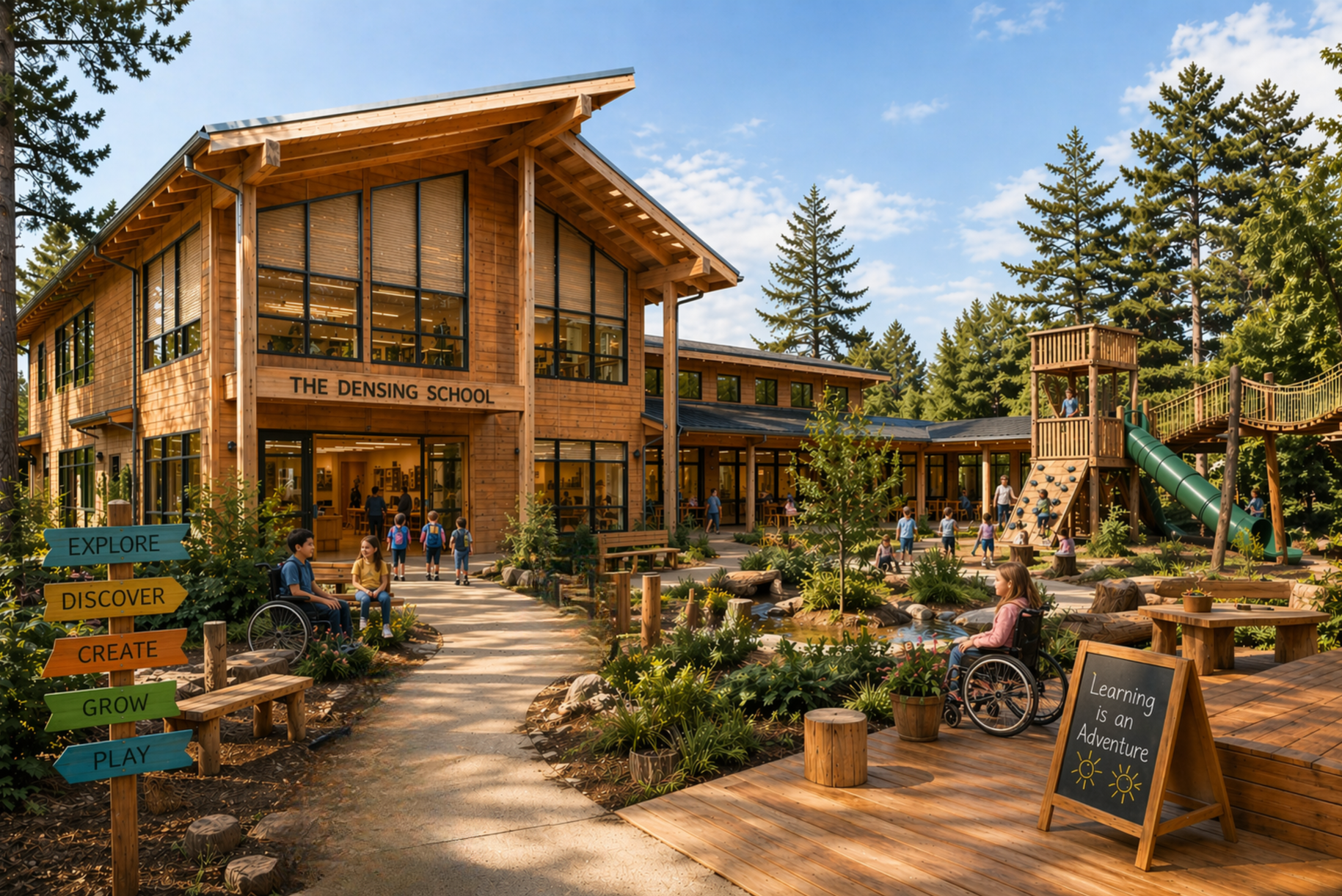
The Densing School Vision
A long-term vision for what a Densing school environment could one day look like.
Where the Vision Began
The Densing Method began with my daughter. When traditional learning environments were not meeting her learning needs, I started creating materials that were more structured, hands-on, visual, easy to follow, and connected to her interests. Later, when I used similar materials in special education classrooms, I saw other children respond with more engagement, confidence, and progress. Those experiences shaped the foundation of a bigger vision: a future Densing learning environment designed around individualized support and the way children truly learn best.
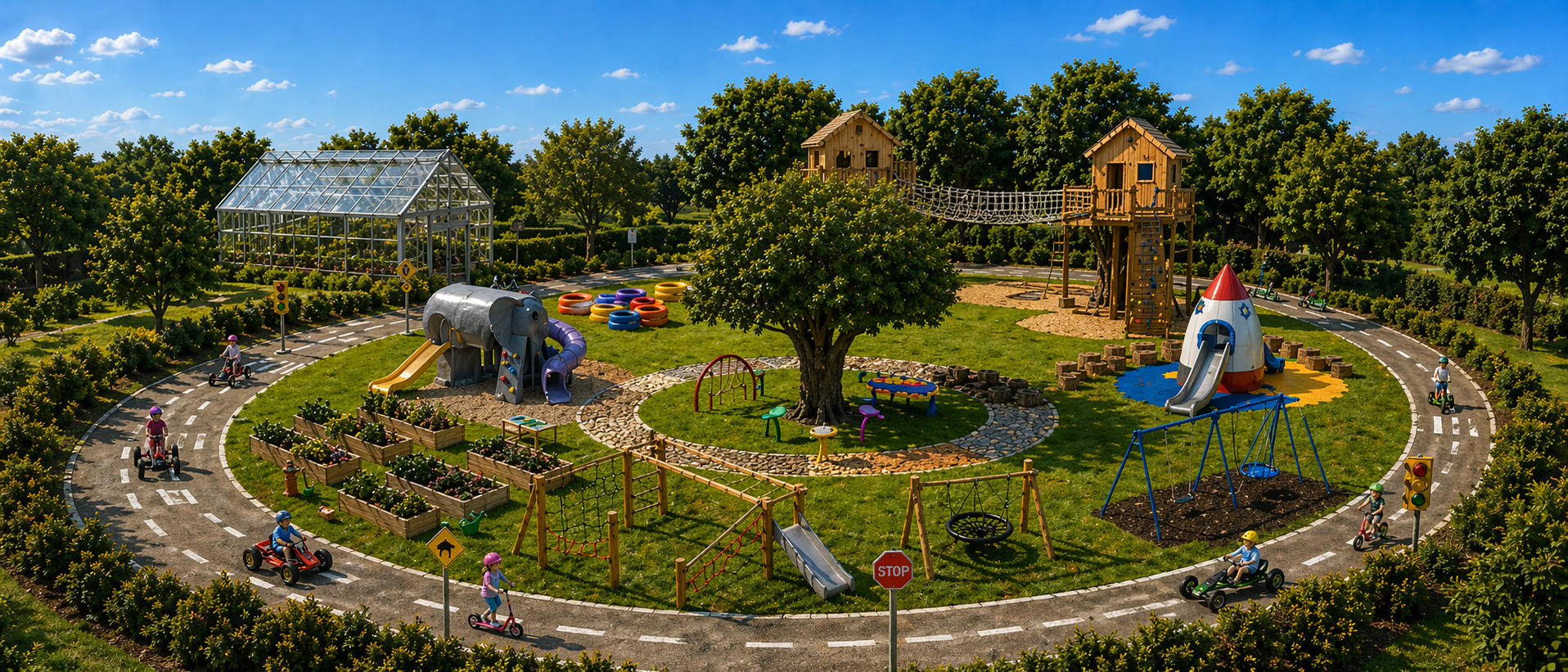
Outdoor Learning and Hands-On Exploration
The vision also includes an outdoor area that supports sensory development, movement, play, and real-world learning. Sensory paths, gardens, music areas, riding paths, and workshop spaces could give children more ways to explore, create, move, and connect with nature. Learning would not be limited to desks and worksheets. It would be active, practical, and meaningful.
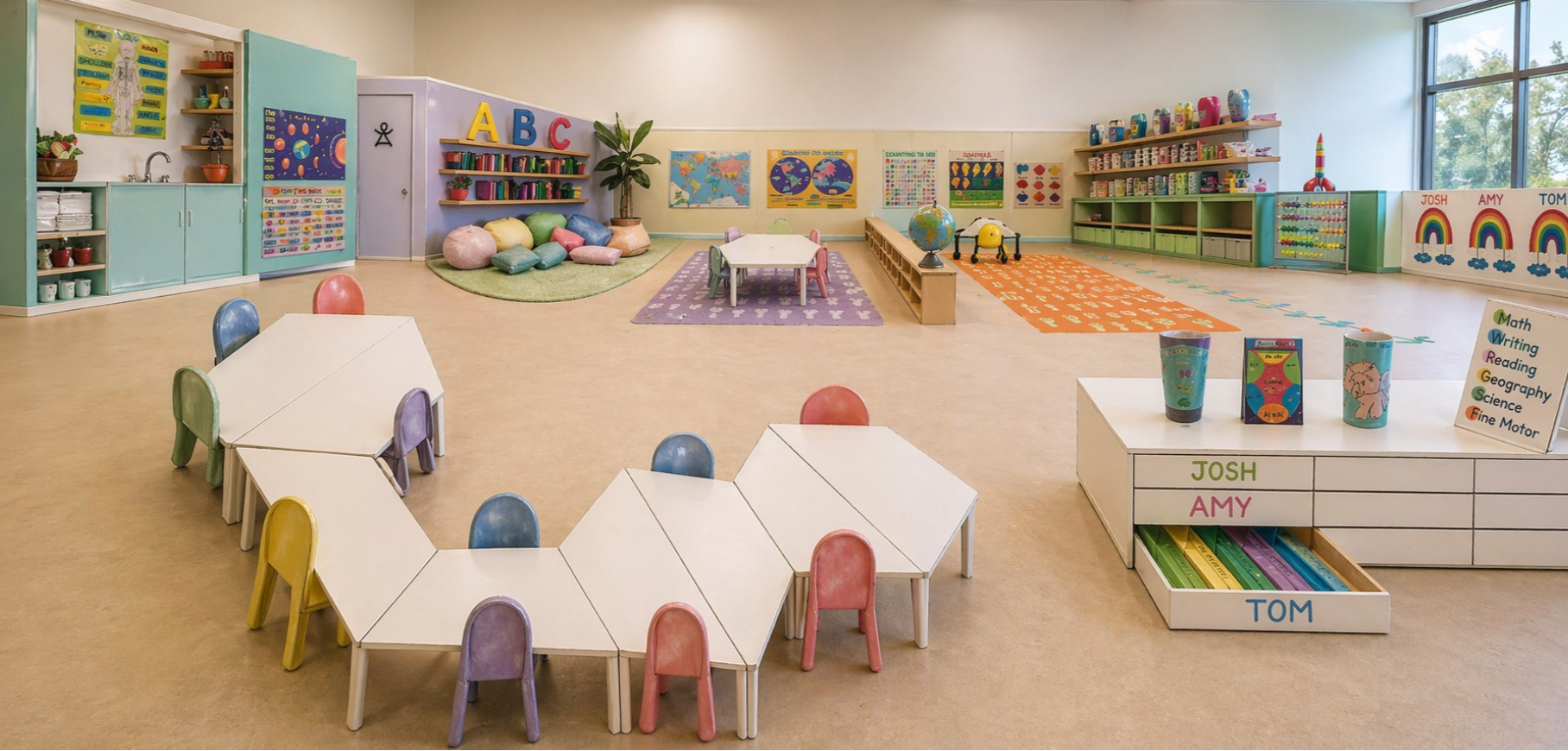
A Classroom Designed Around the Child
This prototype classroom is designed to feel calm, welcoming, organized, and flexible. Clear learning areas support reading, math, science, sensory activities, and practical life skills, helping children move through the space with confidence and independence. Materials are easy to reach, easy to use, and easy to return, encouraging responsibility and self-direction. Handmade posters, visual supports, and interactive materials make learning more engaging and easier to understand. Flexible furniture, natural light, and quiet work areas help create a space where children feel safe, supported, and ready to learn.
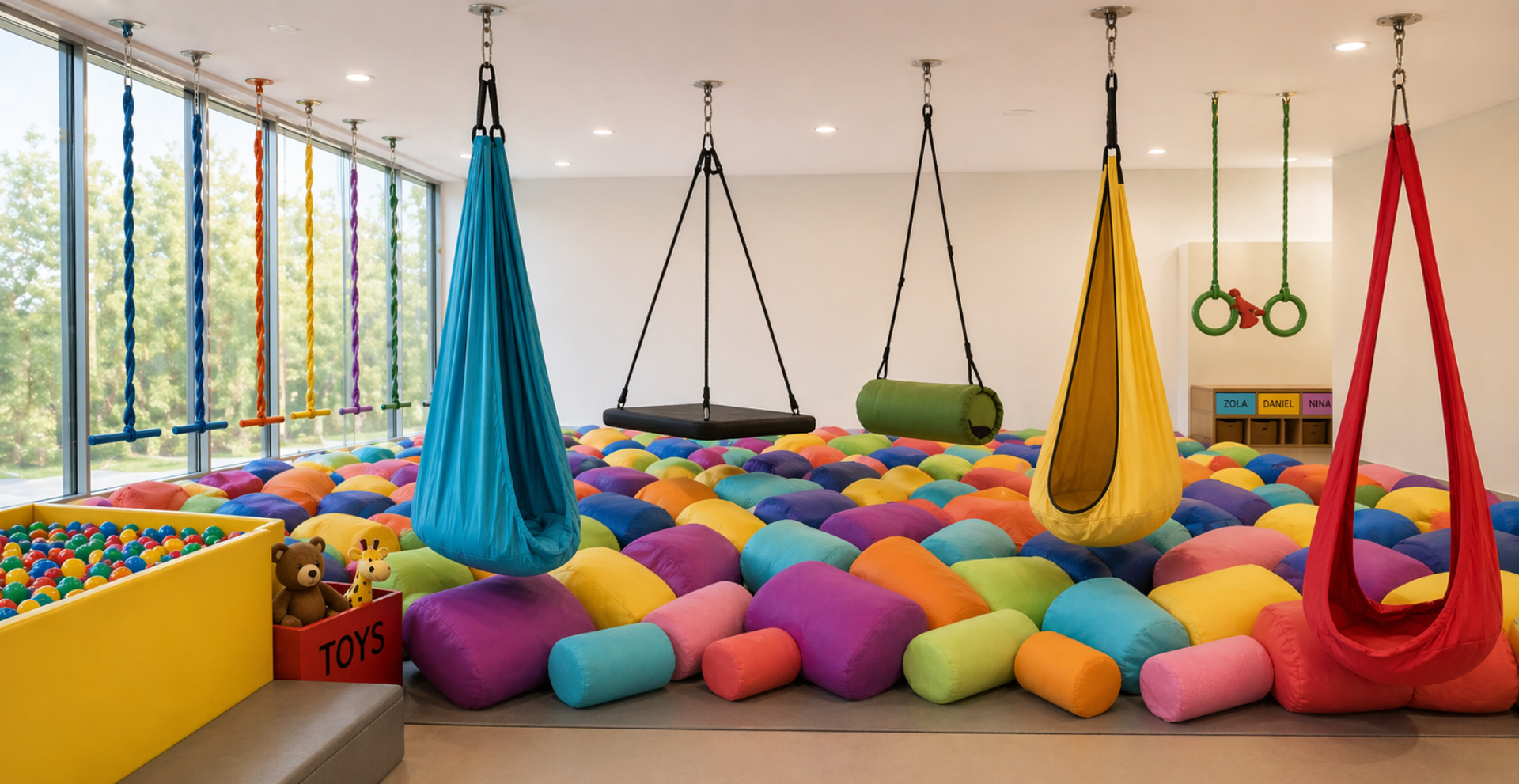
Sensory and Movement Spaces
Learning does not only happen while sitting still. A future Densing learning environment could include spaces that support regulation, balance, coordination, and body awareness, such as a therapeutic pillow and swing room, movement-based learning areas, and sensory-friendly spaces. These environments can help children regulate stress, improve focus, and strengthen the physical foundations that support learning.
For many children, especially those with sensory needs or learning differences, movement and sensory input are an important part of learning. When children feel more regulated in their bodies, they are often better able to focus, participate, and engage with confidence. While they move, children can also build speech and language skills through pretend play, strengthen memory through songs and repetition, and practice early math through counting, patterns, and movement-based games.
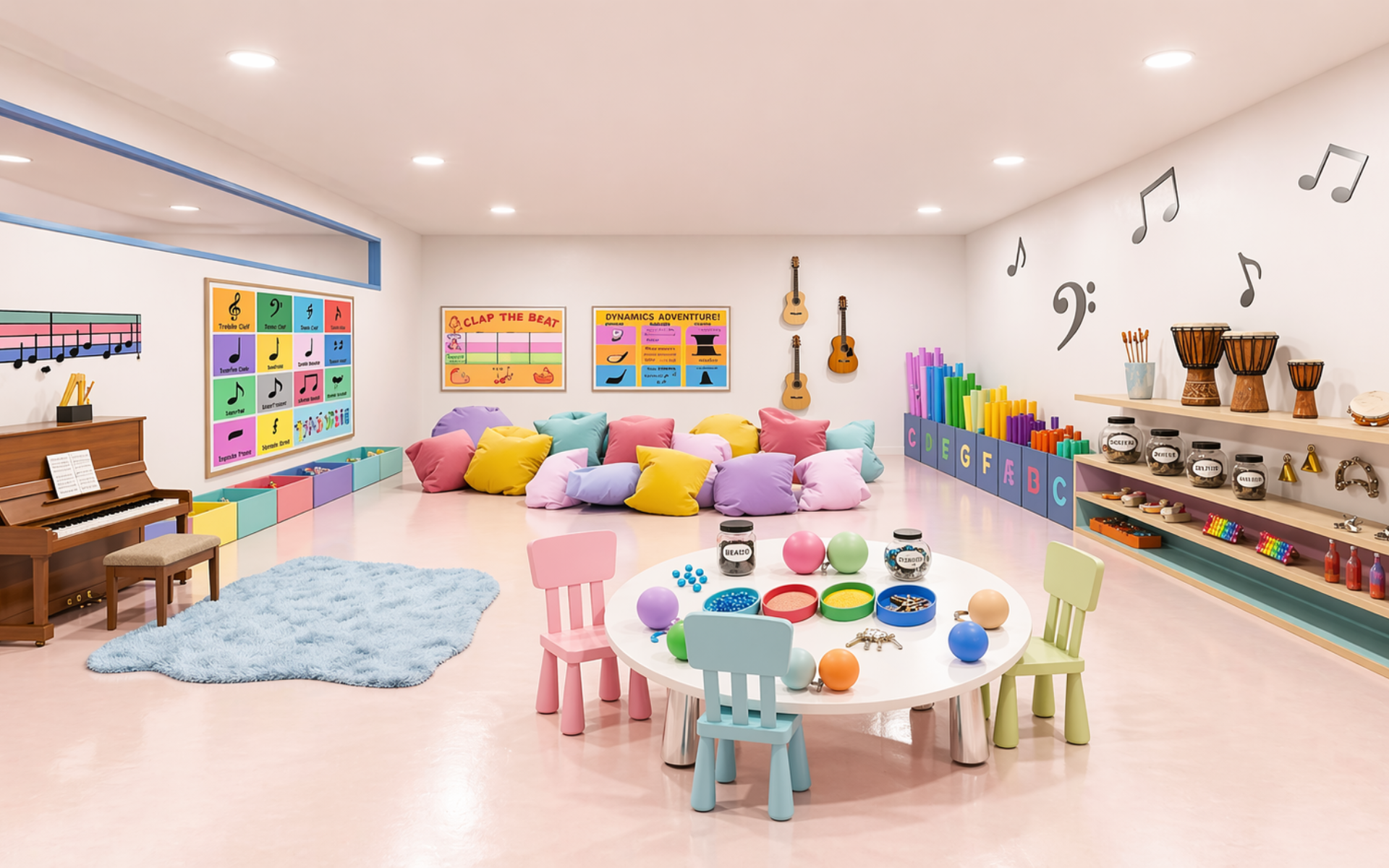
Music, Rhythm & Creative Expression
The music room is a calm, welcoming space where children can explore sound, rhythm, movement, and creativity in a way that feels playful and accessible. With instruments, visual supports, hands-on materials, and flexible seating, it offers different ways for children to participate based on their comfort level, interests, and learning style.
Music and rhythm can support language development, coordination, listening, memory, attention, and self-expression. For children with learning differences, they can also provide an engaging way to build confidence, connect with others, and take part in meaningful learning through repetition, movement, and creative exploration.
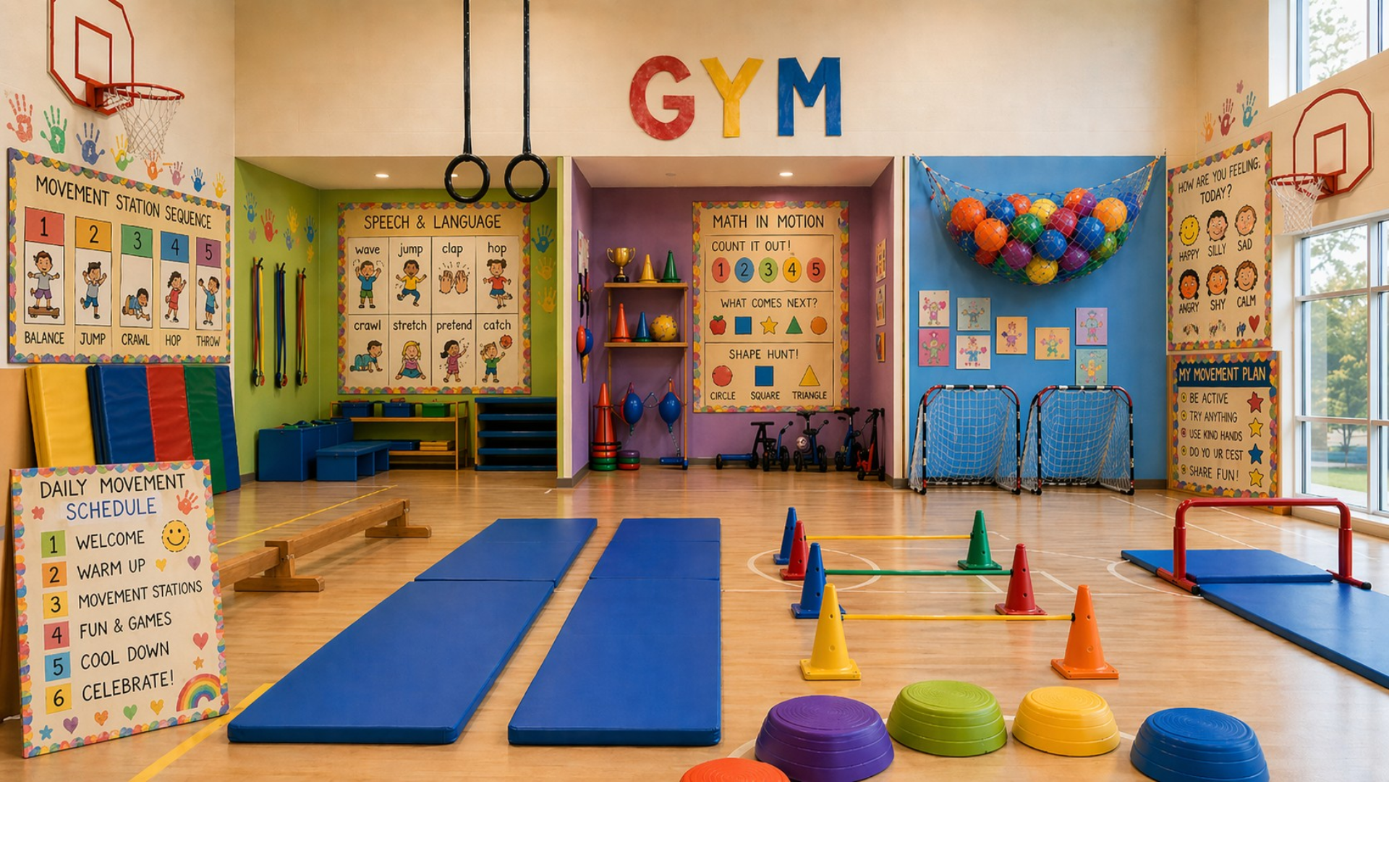
More Than a Gym: Movement, Regulation & Physical Development
This prototype reimagines the gym as more than a space for exercise or sports. It is designed to support coordination, balance, body awareness, regulation, and confidence while also creating opportunities for learning through movement. Unlike a traditional gym, this space uses structured activities, visual supports, and child-friendly materials to help children build physical, social, and early academic skills in an active and supportive way.
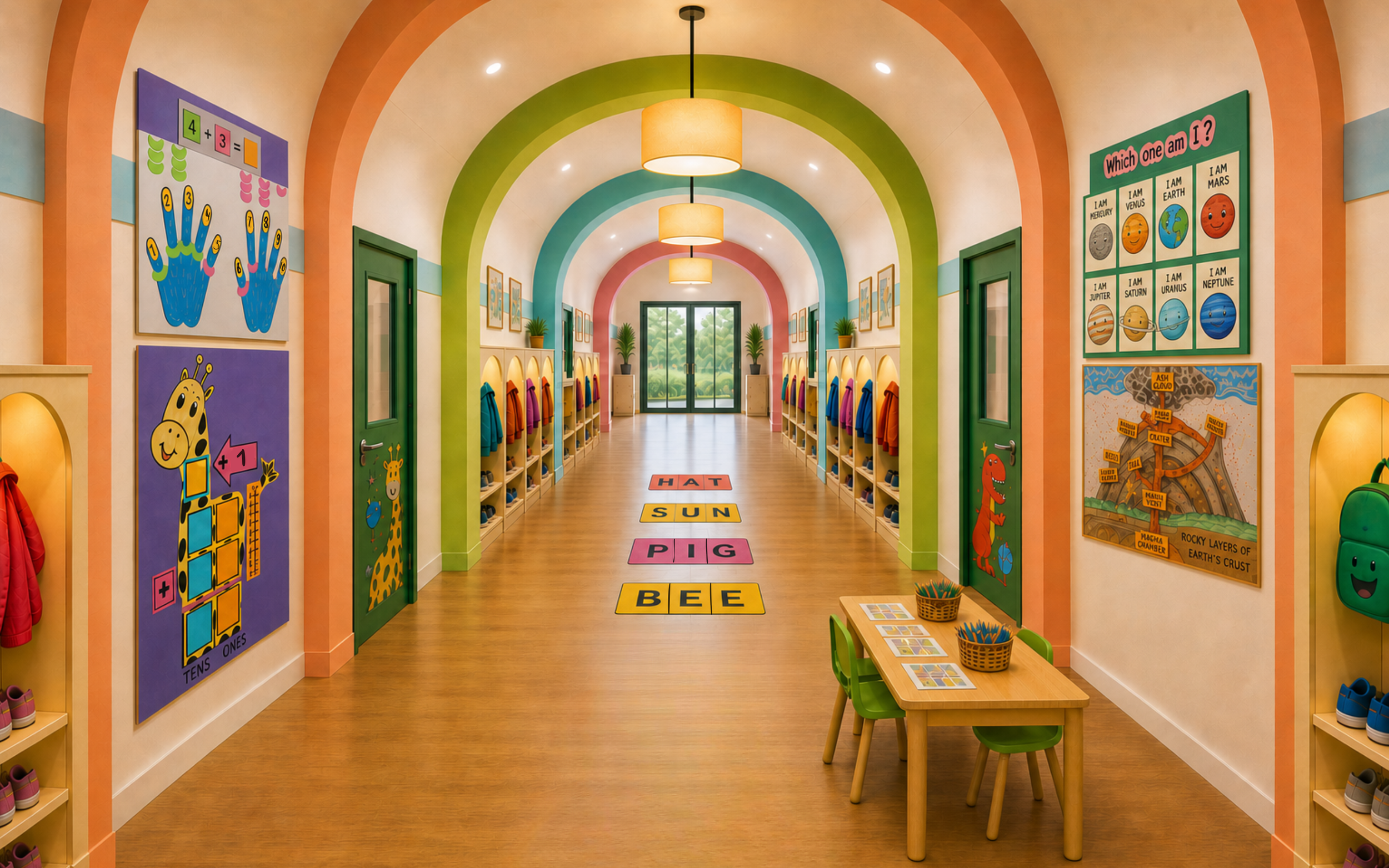
A Hallway Designed for Independent Learning
In this prototype, the hallway is not just a transition space—it becomes an active part of the learning environment. Instead of static decorations, the hallway would include interactive learning stations, visual guides, and student-created materials that children can use independently.
Children could revisit concepts through hands-on displays, such as counting walls, word-building stations, or real-world problem-solving prompts. Clearly labeled areas and consistent visual systems would help children navigate the space on their own, reinforcing routines and executive functioning skills.
Student work would not only be displayed but also used as learning tools—allowing children to reflect, revisit, and build on what they have created. The hallway becomes a space where movement, repetition, and independence support deeper understanding.
Small Group Support and Individualized Learning
A Densing school environment would be built around the idea that children learn in different ways and at different speeds. Smaller class sizes, individualized materials, and close support from teachers and assistants would make it easier to meet each child where they are. The goal would be to create a calm, supportive setting where children can grow academically, socially, emotionally, and physically.
More Than a Classroom
This vision is not only about furniture or room design. It is about creating a learning environment where children can participate actively, build confidence, develop life skills, and feel understood. The Densing Method began with creating materials that better supported children’s needs. This future vision carries that same idea forward into the whole school environment.
A Vision for the Future
The Densing school vision is a long-term goal: a place where structured, hands-on, visual, and interest-based learning comes together in one supportive environment. It is a vision shaped by real experience, thoughtful observation, and the belief that education can be built in a more meaningful way for all children.
The Educational Approach Behind the Prototype
This prototype is rooted in the Densing Method and shaped by the ideas behind the Densing book series. Together, they reflect an approach to learning that values structure, visual support, hands-on experiences, movement, and meaningful participation. To explore the thinking behind this concept in more detail, you can learn more about the method and browse the full book series that helped shape this vision.