

Free Dyspraxia Checklist for Children – Signs, Motor Skills, and Support Strategies
Does Your Child Seem Clumsy or Struggle With Everyday Movements?
Something feels off — but it’s hard to explain.
Maybe your child:
trips often or bumps into things
struggles with buttons, zippers, or tying shoes
has difficulty holding a pencil or using scissors
avoids activities like climbing, biking, or sports
seems tired quickly during physical tasks
wants to do things—but their body doesn’t cooperate
If that sounds familiar, you’re not alone.
Not every child who shows some of these signs has dyspraxia. Development can vary, and some skills take time to build. But if these challenges persist or significantly affect daily life, it can be helpful to take a closer look.
This page will help you recognize common signs of dyspraxia and understand what can help your child build confidence and coordination.
Explore more checklists:
What is Dyspraxia (Developmental Coordination Disorder)?
In short, Dyspraxia is a neurodivergent condition that affects how a child plans and carries out movement.
It can impact:
fine motor skills (writing, cutting, buttoning)
gross motor skills (running, jumping, balance)
coordination and spatial awareness
It is not a lack of effort—it’s a difference in how the brain organizes movement
Signs of Dyspraxia in Children
Children with dyspraxia may show:
Frequent tripping, bumping into objects, or appearing uncoordinated
Difficulty with fine motor tasks like writing, drawing, or cutting
Trouble with gross motor activities like running, jumping, or climbing
Poor balance or difficulty coordinating movements
Challenges with everyday tasks like dressing or using utensils
Difficulty judging distances or navigating space
Fatigue during physical activities
Avoidance of tasks that require coordination
How to Support Your Child
break tasks into small, clear steps
give time to practice everyday movements
use visual and step-by-step guidance
include movement-based and hands-on activities
support fine motor skills through simple activities (cutting, drawing, building)
allow extra time and reduce pressure
celebrate effort and small improvements
These small adjustments can help movement feel more manageable and less frustrating.
Structured, step-by-step approaches often make a big difference—especially when they match your child’s pace and interests.
Learn how to support your child step by step at home without causing frustration→
Some parents find it helpful to use guided activities that support both sensory processing and motor development.
The Densing Teaching Method: Sensory, Fine, and Gross Motor Development → book offers hands-on, step-by-step activities that children can build and interact with—helping improve coordination, motor planning, and confidence through structured, engaging learning.
How to Support Your Child
break tasks into small, clear steps
give time to practice everyday movements
use visual and step-by-step guidance
include movement-based and hands-on activities
support fine motor skills through simple activities (cutting, drawing, building)
allow extra time and reduce pressure
celebrate effort and small improvements
These small adjustments can help movement feel more manageable and less frustrating.
Structured, step-by-step approaches often make a big difference—especially when they match your child’s pace and interests.
Learn how to support your child step by step at home without causing frustration→
Some parents find it helpful to use guided activities that support both sensory processing and motor development.
The Densing Teaching Method: Sensory, Fine, and Gross Motor Development → book offers hands-on, step-by-step activities that children can build and interact with—helping improve coordination, motor planning, and confidence through structured, engaging learning.
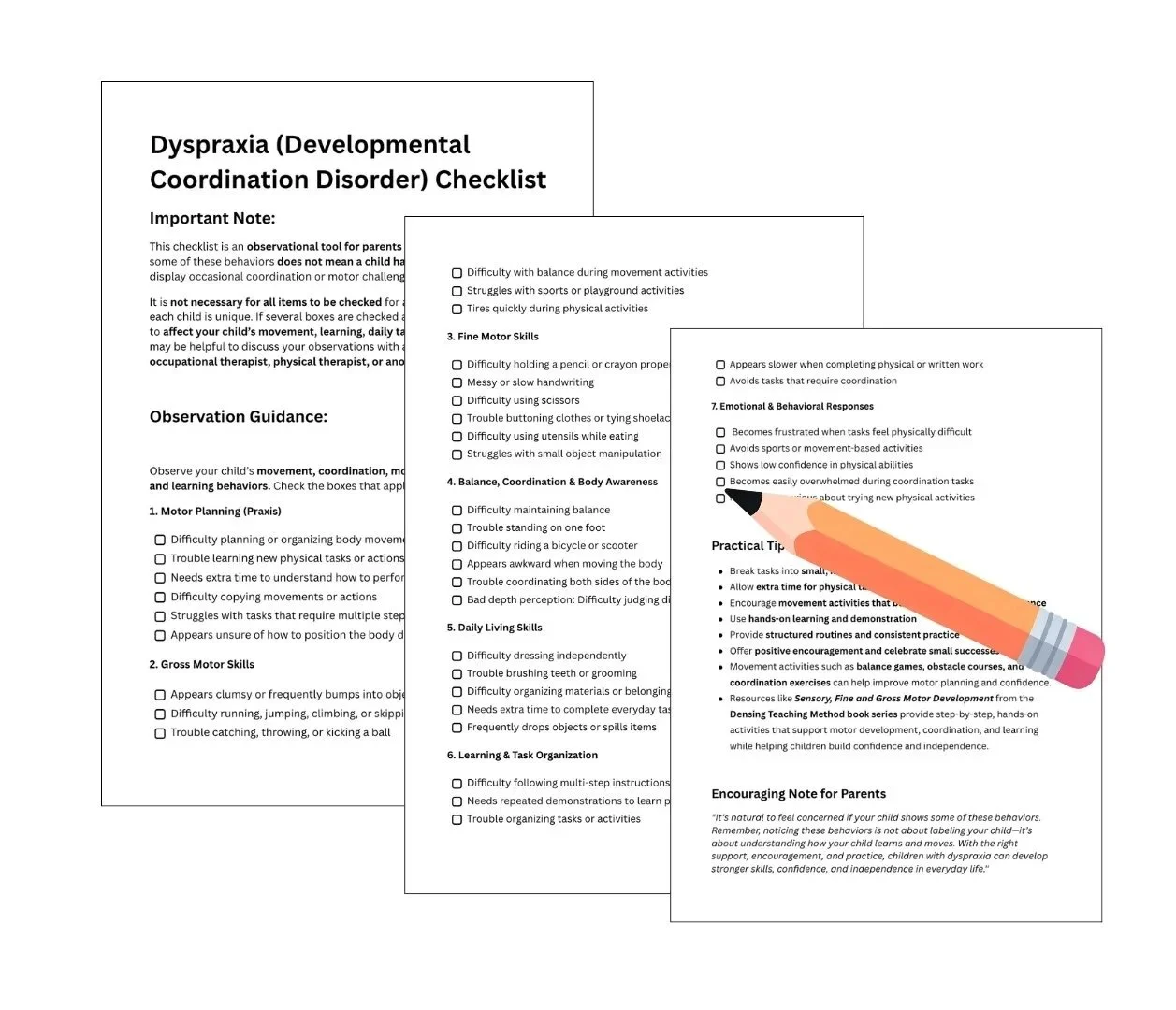
Downloadable Dyspraxia Checklist
If you’re noticing some of these signs, this checklist can help you track patterns and better understand where your child may need support.
This is not a diagnosis—but it can help you take the next step.
Explore More Neurodivergent Checklists
Every child’s brain is unique, and neurodivergent traits can show up in many different ways. If you want to explore other areas of learning, behavior, and development, these individual checklists can help you observe specific traits and find strategies to support your child:
Neurodivergence Overview – Learn about neurodivergent traits, understand differences in thinking, learning, and behavior, and access a general neurodivergence checklist.
ADHD Checklist for Children – Signs, traits, and practical strategies for attention, focus, and impulse control.
Dyslexia Checklist for Children – Reading, decoding, and language-related traits.
Dyscalculia Checklist for Children – Number sense, math skills, and problem-solving differences.
Dysgraphia Checklist for Children – Handwriting, fine motor, and written expression challenges.
Autism Spectrum Disorder (ASD) Checklist – Social communication, repetitive behaviors, and sensory differences.
Sensory Processing Disorder (SPD) Checklist – Sensory sensitivities, seeking or avoiding input, and self-regulation.
Executive Functioning Checklist for Children – Planning, organization, task completion, and memory support.
Each checklist links to a dedicated page with practical tips and strategies to help children thrive. Tracking behaviors over time can provide useful insights for parents and caregivers and guide discussions with professionals.
Observing Learning and Development Differences: Guidance for Parents
Seeing your child show signs that match one or more of these categories can feel overwhelming, but it does not automatically mean they have a diagnosis. Many behaviors may be part of a temporary developmental phase, while others may reflect a neurodivergent learning style. The key is to keep observing your child, track behaviors using checklists, and consult a pediatrician, psychologist, or specialist for professional guidance. While a diagnosis may initially feel overwhelming, it can be a crucial step in providing your child with the right support.
By focusing on your child’s individual strengths and needs, and using positive reinforcement and structured support, you can help them feel confident, engage fully in learning, and develop skills that will benefit them long-term. Understanding these differences early allows you to provide targeted strategies, and support your child’s growth in both academic and life skills.
Takeaway: Every child is unique, and early observation combined with practical strategies and professional guidance can make a meaningful difference in their development.