

Free Sensory Processing Disorder (SPD) Checklist for Children – Signs & Support Strategies
Is Your Child Easily Overwhelmed by Sounds, Textures, or Movement?
Something feels off — but it’s hard to explain.
Maybe your child:
covers their ears at everyday sounds
refuses certain clothes or foods because they “feel wrong”
constantly seeks movement—jumping, spinning, crashing
struggles with balance or coordination
gets overwhelmed quickly in busy or noisy environments
seems distracted or unable to focus, even when trying
If that sounds familiar, you’re not alone.
This page will help you recognize common signs of sensory processing differences and understand what can help your child feel more regulated and comfortable.
Explore more checklists:
What is Sensory Processing Disorder?
In short, Sensory Processing Disorder (SPD) affects how a child’s brain receives and responds to sensory information.
This includes:
sounds
touch
movement
visual input
taste and smell
Some children may be over-sensitive, while others may be under-responsive or constantly seeking input.
It is not a behavior problem—it’s a difference in how sensory information is processed.
Signs of Sensory Processing Differences in Children
Children may show:
Overreacting or underreacting to sounds, lights, textures, or smells
Avoiding certain clothing, foods, or activities
Constant movement or sensory seeking (jumping, spinning, touching everything)
Difficulty with balance, coordination, or motor planning
Trouble focusing due to sensory distractions
Becoming overwhelmed or anxious in busy environments
Strong emotional reactions when sensory input becomes too much
Not every child who is sensitive to sound or touch has a sensory processing difference. Children can go through phases. But if these reactions are strong or ongoing, it can help to take a closer look.
How to Support Your Child
create predictable routines with calming or alerting activities
provide regular sensory breaks throughout the day
use supportive tools (fidgets, headphones, weighted items)
include movement and hands-on activities (climbing, swinging, tactile play)
observe what helps and what overwhelms your child
reduce unnecessary sensory input when needed
build confidence through small, successful experiences
These small adjustments can help your child feel more regulated, focused, and comfortable.
Structured, step-by-step approaches often make a big difference—especially when they match your child’s needs and interests.
Some parents find it helpful to use guided activities that support both sensory regulation and motor development.
The Densing Teaching Method: Sensory, Fine, and Gross Motor Development ⬇ book provides hands-on activities your child can build and interact with—supporting sensory processing, coordination, and engagement through structured, interest-based learning.
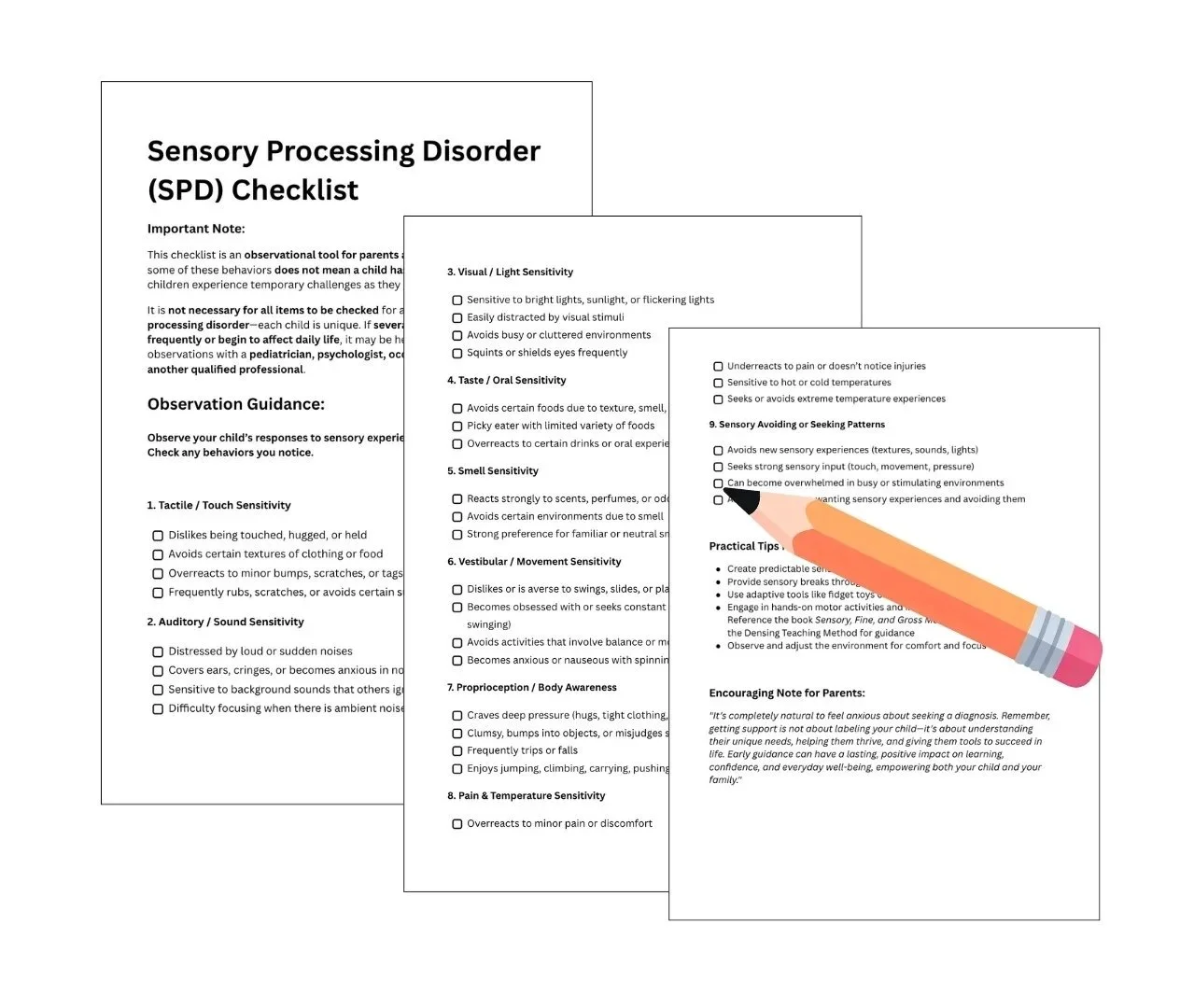
Downloadable SPD Checklist
If you’re noticing some of these signs, this checklist can help you track patterns and better understand what your child responds to.
This is not a diagnosis—but it can help you take the next step.
Explore More Neurodivergent Checklists
Every child’s brain is unique, and neurodivergent traits can show up in many different ways. If you want to explore other areas of learning, behavior, and development, these individual checklists can help you observe specific traits and find strategies to support your child:
Neurodivergence Overview – Learn about neurodivergent traits, understand differences in thinking, learning, and behavior, and access a general neurodivergence checklist.
ADHD Checklist for Children – Signs, traits, and practical strategies for attention, focus, and impulse control.
Dyspraxia Checklist for Children – Coordination, motor planning, and daily activity support.
Dysgraphia Checklist for Children – Handwriting, fine motor, and written expression challenges.
Dyslexia Checklist for Children – Reading, decoding, and language-related traits.
Autism Spectrum Disorder (ASD) Checklist – Social communication, repetitive behaviors, and sensory differences.
Dyscalculia Checklist for Children – Number sense, math skills, and problem-solving differences.
Executive Functioning Checklist for Children – Planning, organization, task completion, and memory support.
Each checklist links to a dedicated page with practical tips and strategies to help children thrive. Tracking behaviors over time can provide useful insights for parents and caregivers and guide discussions with professionals.
Observing Learning and Development Differences: Guidance for Parents
Seeing your child show signs that match one or more of these categories can feel overwhelming, but it does not automatically mean they have a diagnosis. Many behaviors may be part of a temporary developmental phase, while others may reflect a neurodivergent learning style. The key is to keep observing your child, track behaviors using checklists, and consult a pediatrician, psychologist, or specialist for professional guidance. While a diagnosis may initially feel overwhelming, it can be a crucial step in providing your child with the right support.
By focusing on your child’s individual strengths and needs, and using positive reinforcement and structured support, you can help them feel confident, engage fully in learning, and develop skills that will benefit them long-term. Understanding these differences early allows you to provide targeted strategies, and support your child’s growth in both academic and life skills.
Takeaway: Every child is unique, and early observation combined with practical strategies and professional guidance can make a meaningful difference in their development.