

Free Childhood Apraxia of Speech Observation Checklist for Parents
Is Your Child Struggling to Talk, Say Words Clearly, or Falling Behind on Speech Milestones? Something feels off — but it’s hard to explain.
Maybe your child:
struggles to talk clearly
says the same word differently at different times
has trouble copying sounds, words, or phrases
leaves out sounds or syllables when speaking
finds longer words harder to say than short words
becomes frustrated when trying to communicate
is behind on speech development milestones
If that sounds familiar, you’re not alone.
It’s not about effort — and it’s not a lack of intelligence.
This page will help you recognize common signs of childhood apraxia of speech, understand what these challenges can look like in everyday communication, and find simple ways to support your child step by step.
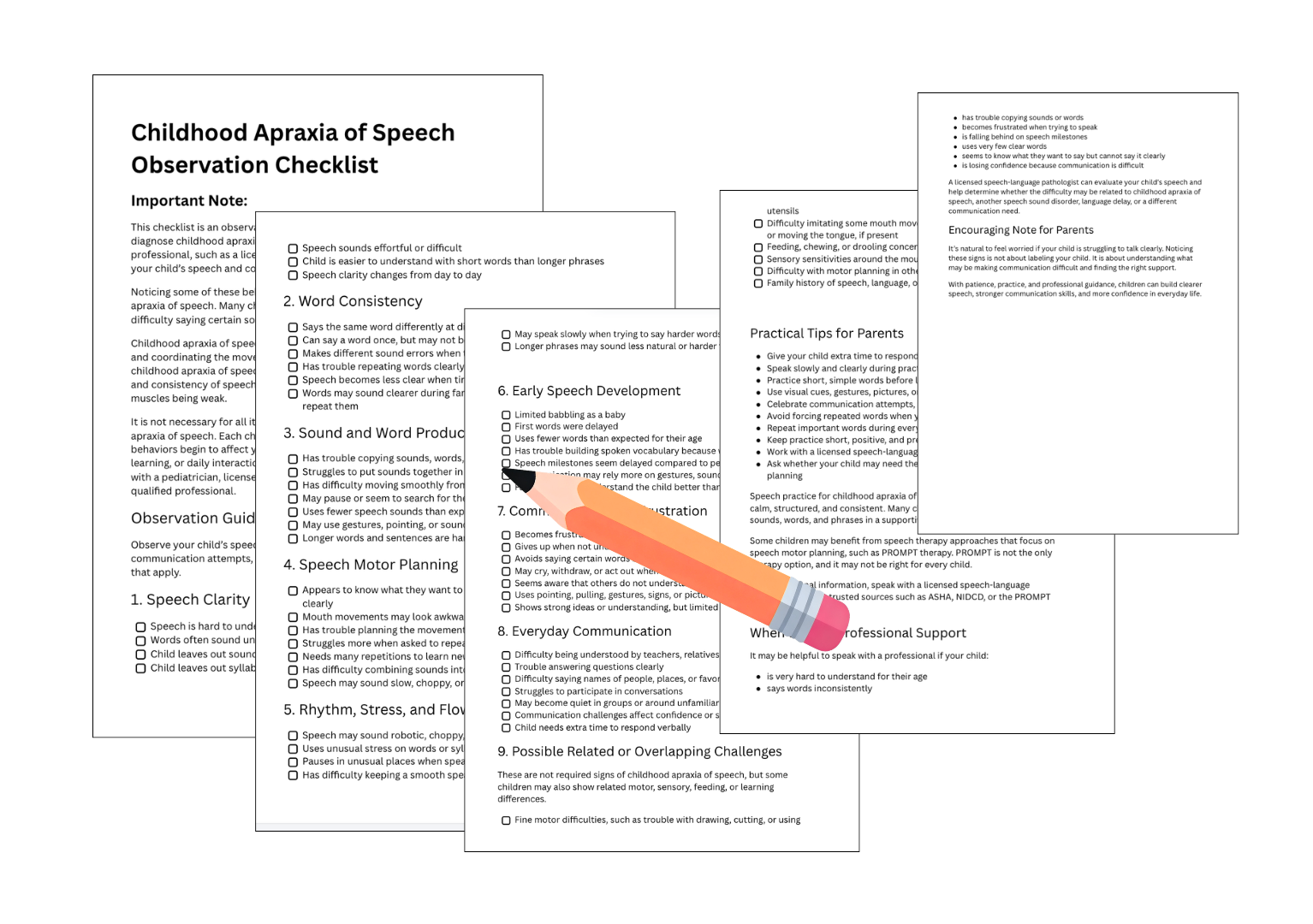
⬇ Download the Free Apraxia of Speech Checklist
This checklist is for parent awareness only. It is not a diagnosis and cannot confirm or rule out childhood apraxia of speech. If you checked several boxes or feel concerned about your child’s speech clarity, word consistency, or communication development, consider talking with your child’s pediatrician or a licensed speech-language pathologist. Early support can help you understand what your child may need.
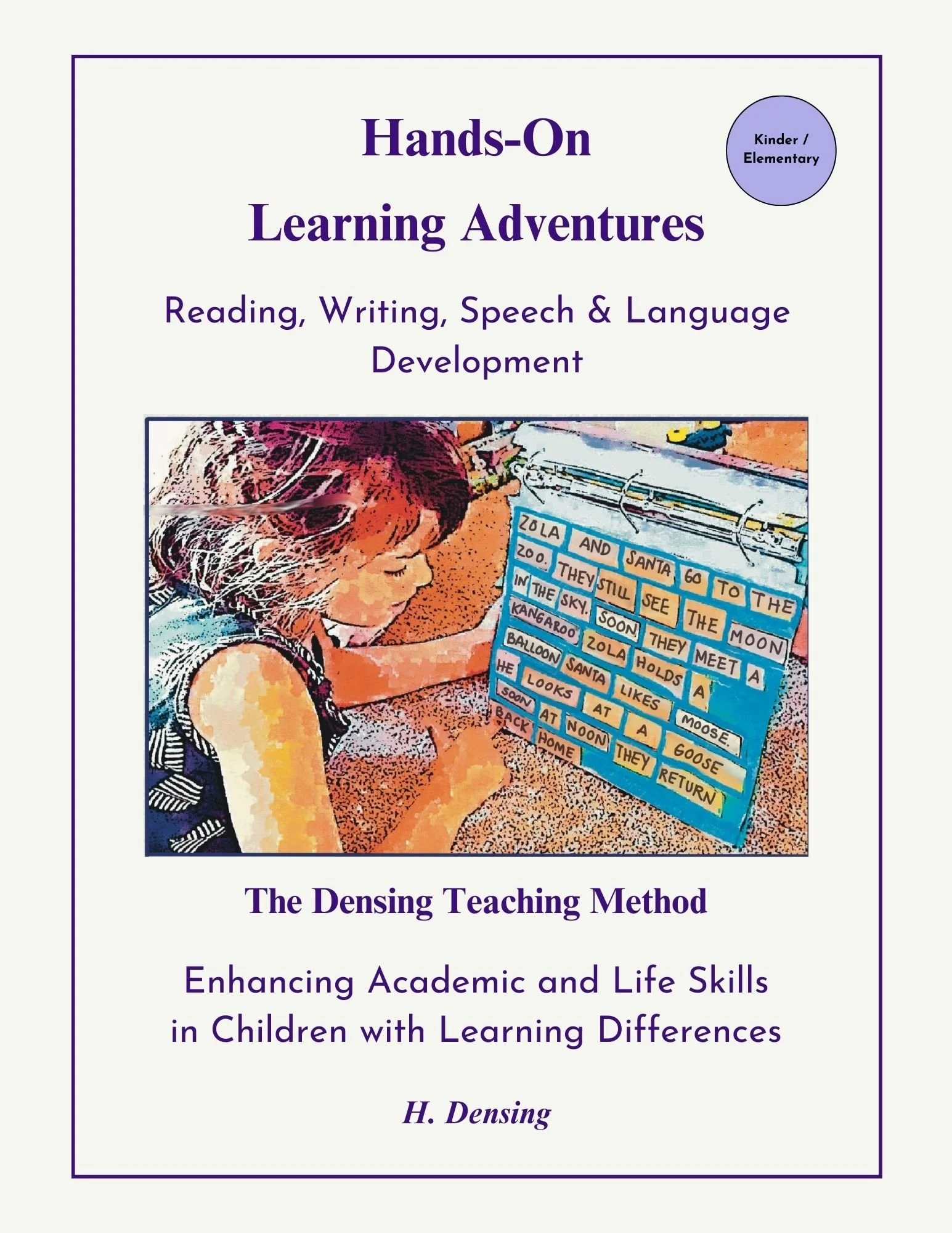
Looking for a hands-on way to support your child’s reading, handwriting, and speech-language development?
If your child needs more than information, the Densing Method gives you a step-by-step way to build early learning skills through structured, visual, and practical activities.
Use it to support:
early reading skills
handwriting practice
speech and language growth
fine motor development
confidence with learning tasks
Explore more checklists:
What Is Childhood Apraxia of Speech?
Childhood apraxia of speech is a motor speech difficulty. This means your child may know what they want to say, but their brain has trouble planning the mouth movements needed to say the words clearly.
Speech uses many small movements of the:
lips
tongue
jaw
mouth
breath
When a child has apraxia of speech, these movements can be hard to plan and coordinate. This can make speech sound:
unclear
inconsistent
effortful
frustrating
Childhood apraxia of speech is not caused by:
laziness
low intelligence
lack of effort
a child “just not trying hard enough”
Childhood apraxia of speech is different from a simple speech delay. With apraxia, the challenge is often not just learning words. The bigger challenge is planning and coordinating the movements needed to say those words clearly.
Signs of Childhood Apraxia of Speech in Children
Children with childhood apraxia of speech may show some of the following signs:
saying the same word differently at different times
having trouble copying sounds, words, or phrases
struggling more with longer words or sentences
leaving out sounds or syllables
using fewer sounds than expected for their age
being hard to understand, especially for unfamiliar people
seeming to search or struggle for the right mouth movements
speaking with unusual rhythm, stress, or pauses
becoming frustrated because they know what they want to say
falling behind on speech development milestones
Not every child will show all of these signs, but patterns over time can give you important clues.
Speech skills develop at different speeds, especially in the early years. But if your child’s speech is unclear, inconsistent, effortful, or affecting their confidence, it may be worth taking a closer look and speaking with a licensed speech-language pathologist.
How to Support Your Child
speak slowly and clearly during practice
give your child extra time to respond
avoid forcing repeated words when they are already frustrated
practice short, simple words before longer phrases
use visual cues, gestures, and hands-on support
celebrate small speech attempts, not just perfect words
repeat important words during everyday routines
work with a licensed speech-language pathologist when possible
Structured, repeated practice often helps children with childhood apraxia of speech, especially when it is calm, predictable, and matched to the child’s pace.
Children may also benefit from speech therapy approaches that focus on motor planning, such as PROMPT therapy. You can learn more about this below.
Therapy Options for Childhood Apraxia of Speech
Children with childhood apraxia of speech often need speech therapy that focuses on speech motor planning. This means therapy usually works on helping a child practice the movements needed to say sounds, syllables, words, and phrases more clearly.
Therapy may include:
repeated practice with sounds, words, and phrases
practice moving smoothly from one sound to another
visual cues, such as watching the therapist’s mouth
tactile cues, such as gentle touch prompts
rhythm, pacing, or movement-based support
short, structured practice sessions
home practice guided by a speech-language pathologist
One approach some families hear about is PROMPT therapy. PROMPT uses gentle touch cues to help guide movements of the jaw, lips, tongue, and mouth. Some children may benefit from this approach, but it is not the only therapy option for childhood apraxia of speech.
A licensed speech-language pathologist can help decide what type of therapy fits your child’s needs.
For more parent information, visit the PROMPT Institute.
Free Childhood Apraxia of Speech Observation Checklist
If you’re noticing speech clarity, consistency, or motor planning concerns, this checklist can help you:
track speech clarity and communication patterns over time
notice possible signs of childhood apraxia of speech
recognize when words sound inconsistent, effortful, or hard to produce
organize your concerns before speaking with a professional
understand what support your child may need next
Download the Childhood Apraxia of Speech Observation Checklist →
Please note: This checklist is for parent awareness only. It is not a diagnosis. If you are concerned about your child’s speech, talk with your child’s pediatrician or a licensed speech-language pathologist.
Helpful Resources for Parents
For more professional information about childhood apraxia of speech, visit:
ASHA: Childhood Apraxia of Speech – parent-friendly information from the American Speech-Language-Hearing Association
NIDCD: Apraxia of Speech – information from the National Institute on Deafness and Other Communication Disorders
PROMPT Institute – parent and caregiver information about PROMPT therapy
Explore Neurodivergent Checklists
Every child’s brain is unique, and neurodivergent traits can show up in many different ways. If you want to explore other areas of learning, behavior, and development, these individual checklists can help you observe specific traits and find strategies to support your child:
Neurodivergence Overview – Learn about neurodivergent traits, understand differences in thinking, learning, and behavior, and access a general neurodivergence checklist.
ADHD Checklist for Children – Signs, traits, and practical strategies for attention, focus, and impulse control.
Dyspraxia Checklist for Children – Coordination, motor planning, and daily activity support.
Dyscalculia Checklist for Children – Number sense, math skills, and problem-solving differences.
Dyslexia Checklist for Children – Reading, decoding, and language-related traits.
Dysgraphia Checklist for Children – Handwriting, fine motor, and written expression challenges.
Autism Spectrum Disorder (ASD) Checklist– Social communication, repetitive behaviors, and sensory differences.
Sensory Processing Disorder (SPD) Checklist – Sensory sensitivities, seeking or avoiding input, and self-regulation.
Executive Functioning Checklist for Children – Planning, organization, task completion, and memory support.
Each checklist links to a dedicated page with practical tips and strategies to help children thrive. Tracking behaviors over time can provide useful insights for parents and caregivers and guide discussions with professionals.
Observing Learning and Development Differences: Guidance for Parents
Seeing your child show signs that match one or more of these categories can feel overwhelming, but it does not automatically mean they have a diagnosis. Many behaviors may be part of a temporary developmental phase, while others may reflect a neurodivergent learning style. The key is to keep observing your child, track behaviors using checklists, and consult a pediatrician, psychologist, or specialist for professional guidance. While a diagnosis may initially feel overwhelming, it can be a crucial step in providing your child with the right support.
By focusing on your child’s individual strengths and needs, and using positive reinforcement and structured support, you can help them feel confident, engage fully in learning, and develop skills that will benefit them long-term. Understanding these differences early allows you to provide targeted strategies, and support your child’s growth in both academic and life skills.
Takeaway: Every child is unique, and early observation combined with practical strategies and professional guidance can make a meaningful difference in their development.