

By H. Densing | Densing Teaching Method
Does your child write letters backwards, struggle to stay on the writing lines, or take much longer than expected to finish a few sentences? Maybe their letters are unusually large, words run together, or writing becomes frustrating before they have finished.
For some children, handwriting takes so much effort that they have little energy left for spelling or thinking about what they want to say.
Handwriting depends on several developing skills, including fine motor coordination, visual guidance, remembering letter shapes, and organizing written language. Understanding which part is difficult can help you find activities that suit your child.
Why Does My Child Write Letters Backwards or Confuse B and D?
It's common for children who are learning to write to confuse letters with similar shapes. Some children write b instead of d, turn m into w, or mix up p and q. Others occasionally reverse letters or numbers.
These mistakes can occur as children develop their ability to recognize, remember, and reproduce letter shapes in the correct orientation. Letter reversals often become less frequent as handwriting skills improve.
The International Dyslexia Association explains that letter reversals can occur when children have not yet developed automatic letter formation. Repeated, structured handwriting practice can help children become more familiar with correct letter shapes and writing movements.
Rather than repeatedly correcting a whole page, try practicing one letter at a time.
For example, draw a large letter on paper and let your child trace it with a finger before using a pencil. You can also form letters with clay, trace them in sand, or mark the starting point with a colored dot.
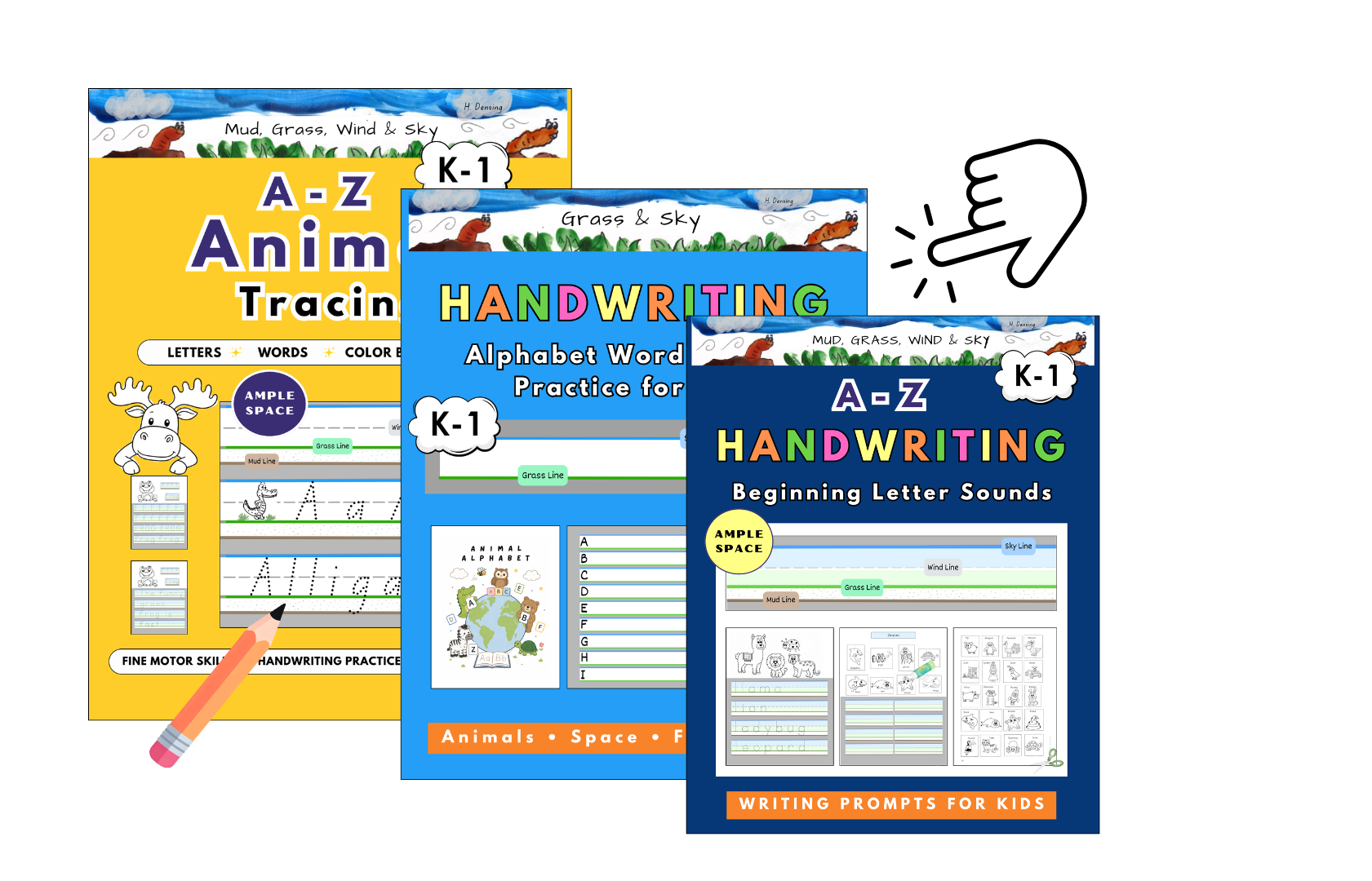
For additional structured handwriting practice, you can explore the Mud, Grass, Wind & Sky Handwriting Adventures workbooks, which offer tracing, letter formation, and creative activities.
Why Does My Child Have Trouble Staying on the Writing Lines?
Some children have difficulty judging where letters should begin and end. They may write above or below the lines, make letters different sizes, or struggle to leave enough space between words.
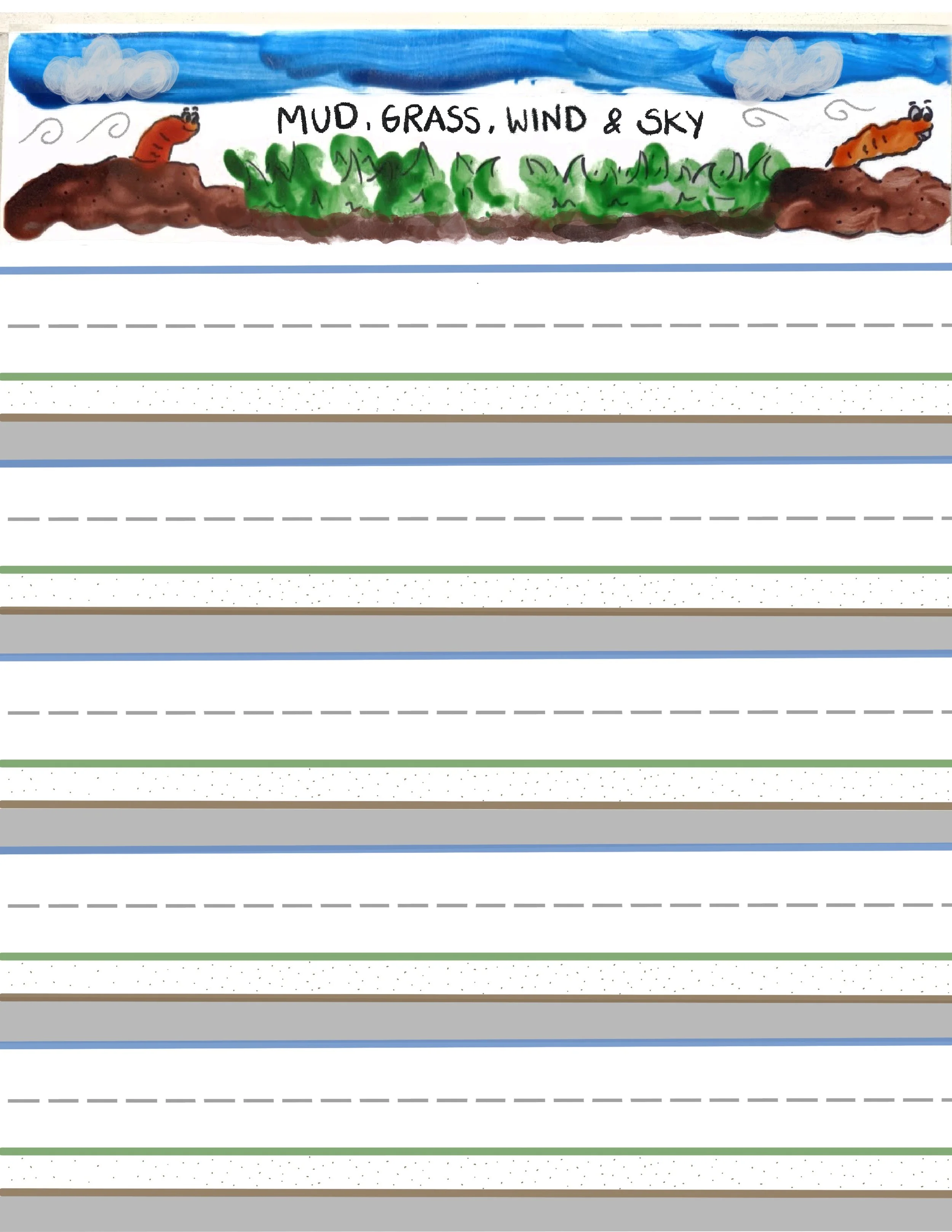
Ordinary writing paper can be difficult to follow when the lines are too close together or provide insufficient visual contrast.
I originally created handwriting sheets with more clearly defined writing lines for my daughter and later used them with students who benefited from additional visual guidance.
You can try adjusting the line spacing, using different colors, or making the writing area larger. Watch whether these changes make writing easier for your child.
The free printable handwriting worksheets can be downloaded and printed or used as inspiration to create your own writing sheets.
Why Does My Child Write So Slowly or Get Tired Easily?
Some children concentrate so hard on forming individual letters that even a short writing assignment becomes exhausting.
You may notice that your child presses very hard on the pencil, frequently adjusts their grip, writes unusually slowly, or complains that their hand hurts.
Fine motor coordination, pencil control, and handwriting fluency can all contribute to these difficulties. Some children may also struggle with everyday activities such as cutting with scissors, fastening buttons, or handling small objects.
Fine Motor Activities That May Help
Handwriting requires children to make small, controlled movements with their fingers and hands. One important skill is the pincer grasp, which involves using the thumb and index finger to pick up and manipulate small objects. This movement contributes to the finger control needed for many everyday tasks, including pencil use.
Children can practice these movements naturally throughout the day. Picking up small pieces of food, peeling stickers, fastening buttons, turning pages, or sorting small objects using their fingertips all provide opportunities to develop hand coordination.
Activities that involve gentle resistance, such as squeezing and shaping modeling clay, can also help children practice using their fingers and hands. Picking up objects with child-safe tongs encourages controlled grasping and releasing.
These activities can be incorporated into daily routines without turning everything into a writing exercise. Over time, children can become more comfortable using their hands for precise movements.
Although fine motor activities can support hand coordination, handwriting also requires specific practice with letter formation, pencil movements, and writing fluency.
The American Occupational Therapy Association (AOTA) emphasizes the importance of practicing handwriting directly. Everyday fine motor activities can provide opportunities to develop hand coordination, but children who struggle with handwriting also need practice forming letters and writing.
For more ideas, the article Fine Motor and Sensory Struggles in Children: Signs and Support might be helpful.
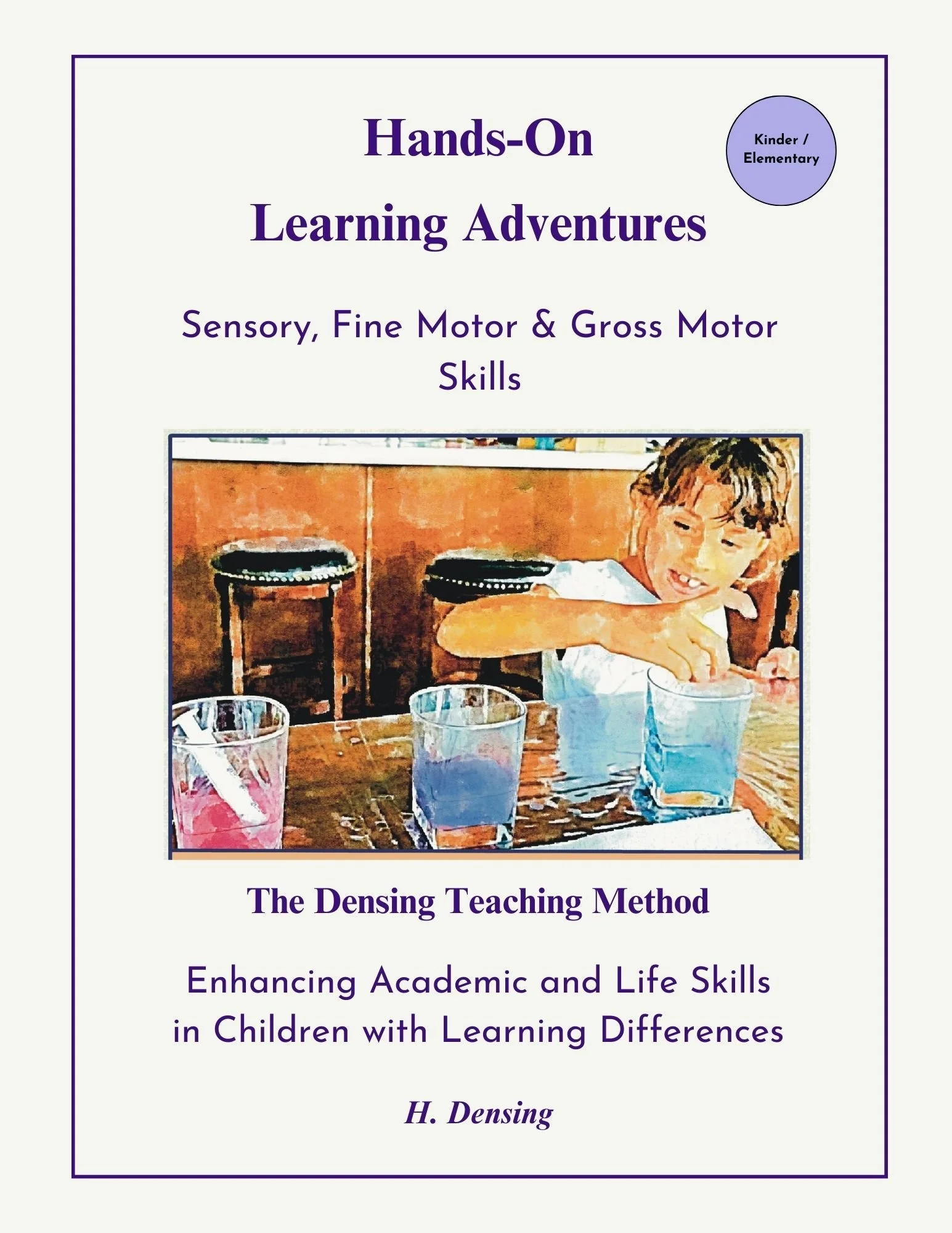
The Hands-On Learning Adventures: Sensory, Fine Motor & Gross Motor Skills book includes over 100 hands-on activities involving sensory exploration, hand coordination, balance, and movement. Parents and teachers can adapt these activities to their children's individual needs and interests.
Why Does My Child Avoid Writing or Become Frustrated?
For some children, handwriting becomes a source of stress because every assignment requires considerable effort.
A child who repeatedly struggles to finish written work may begin avoiding assignments, worrying about mistakes, or becoming upset before starting.
Instead of increasing the amount of practice, look at what makes the task difficult. Is your child worried about spelling? Does their hand become tired? Are they expected to copy too much at once?
Shorter assignments, additional time, or alternative ways to show what they know may help reduce the pressure.
If frustration, avoidance, or worry regularly affect your child's learning, our article Anxiety in Children and Learning Difficulties: Signs Parents May Notice explores how academic challenges and anxiety can sometimes occur together.
What If My Child Can Explain an Answer but Struggles to Write It?
Some children can explain an idea clearly but find it difficult to put that same idea onto paper.
Writing requires them to remember their thoughts while managing spelling, letter formation, spacing, and sentence structure.
If handwriting takes most of their attention, they may forget what they wanted to write.
Try letting your child say a sentence aloud first. Write it down together or provide a short model they can refer to.
For longer assignments, typing, dictation, or having an adult record the child's words may help them express their knowledge while handwriting skills continue to develop.
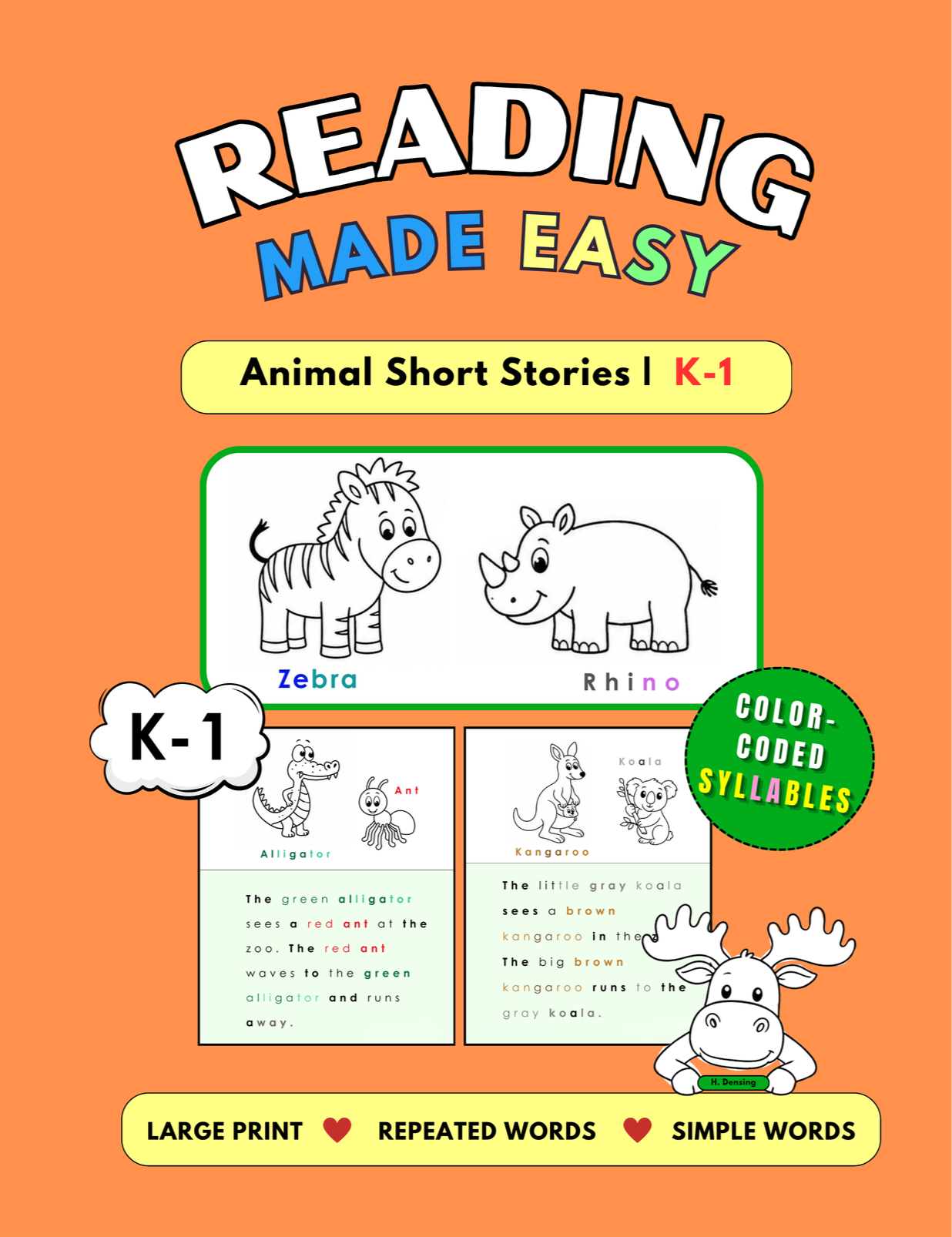
If your child also finds reading difficult, the Reading Made Easy workbook provides structured literacy activities using colored syllables, pictures, repeated words, and hands-on practice.
Make Handwriting Practice More Interesting
A child who dislikes copying letters may enjoy writing when it becomes part of an activity they find interesting.
Try making a small book together. Let your child choose a favorite animal, draw a picture, and write one word or sentence beneath it.
You can also make word cards, label toys, create shopping lists, or write signs for a pretend shop.
These activities give writing a purpose beyond completing a worksheet.
When I started creating learning activities for my daughter, I looked for ways to make difficult tasks easier to understand and more interesting to complete. I later developed and used similar materials with students who needed additional support.
These experiences contributed to the Densing Teaching Method and the Hands-On Learning Adventures book series.
Hands-On Learning Adventures: Reading, Writing, Speech, and Language Development brings together more than 80 hands-on activities and learning materials.
The book includes ideas for supporting handwriting, visual tracking, sight word recognition, reading comprehension, speech, and language development.
Parents and teachers can adapt activities to a child's interests and abilities, using pictures, everyday objects, movement, and other hands-on materials.
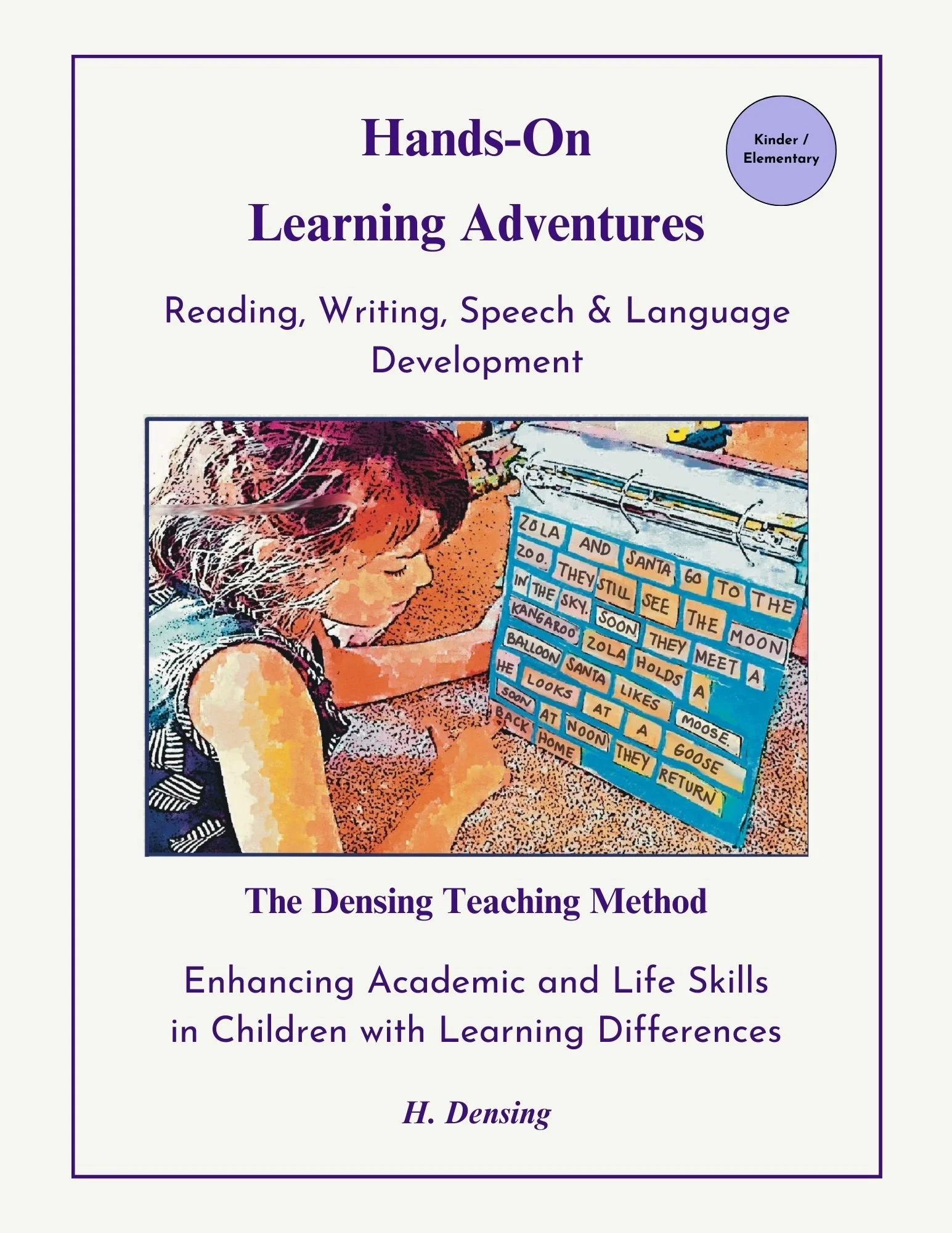
For additional ideas about making traditional learning activities more engaging, explore the article Hands-On Learning Activities for Children with ADHD, Autism, and Learning Differences.
Could Handwriting Difficulties Be Related to Dysgraphia or Dyspraxia?
Persistent handwriting difficulties sometimes occur alongside learning or motor coordination differences.
Dysgraphia can affect handwriting and other aspects of written expression. Children may struggle with letter formation, spelling, writing fluency, or putting their ideas into writing.
Dyspraxia (Developmental Coordination Disorder) can affect motor coordination, making activities such as writing, drawing, cutting, or managing small objects more difficult.
However, slow or messy handwriting does not automatically indicate either condition.
The free checklists can help parents and teachers organize their observations.
When Should I Seek Additional Help for My Child's Handwriting?
Children develop writing skills at different rates. Occasional letter reversals, inconsistent spacing, and slow writing can be part of learning.
However, if handwriting difficulties continue, cause pain or significant fatigue, or regularly interfere with schoolwork, consider speaking with your child's teacher or a qualified professional.
An occupational therapist may be helpful when pencil control or motor coordination is a major concern. Other learning difficulties may require a different type of assessment.
If your child struggles with reading or math as well, our article Why Is Reading, Writing, or Math So Hard for My Child? explores other academic challenges and ways to support learning.
Handwriting practice should give children opportunities to develop their skills without making every writing task a struggle. Clearer visual guidance, manageable activities, and materials that reflect a child's interests can make practice easier to approach.
The most useful starting point is observing what your child finds difficult and adapting the support accordingly.
