


Free Demand Avoidance Checklist for Children: Signs, Patterns & Strategies
Does This Sound Like Your Child?
Does your child strongly resist everyday requests?
Become more upset when they feel pressured?
Struggle with something they usually do easily once it becomes a request?
There may be more going on than simple refusal.
What you’re noticing may be a pattern of demand avoidance.
Explore more checklists:
What Is Demand Avoidance?
Demand avoidance describes difficulty responding to requests, expectations, or things that feel required.
Everyone avoids demands sometimes. For some children, however, resistance to everyday demands may be more persistent or intense and may interfere with daily routines, learning, self care, or other activities.
Everyday demands might include getting dressed, brushing teeth, starting schoolwork, leaving the house, stopping an activity, or following a routine.
There can be many reasons why a child finds a demand difficult. For this reason, demand avoidance describes a pattern of behavior rather than a diagnosis or a single cause.
What Is PDA?
You may have heard the term Pathological Demand Avoidance, or PDA, used to describe a proposed profile involving strong resistance to everyday demands. The concept of PDA remains debated and is not recognized as a separate diagnosis in the DSM 5 TR or ICD 11. The National Autistic Society’s guidance on demand avoidance explains the current discussion in more detail.
Some people and professionals use terms such as PDA profile or demand avoidant profile, while others prefer to describe a person's individual patterns and needs without using a specific label.
Because similar behaviors can occur for different reasons, this page uses the broader term demand avoidance and does not attempt to determine whether a child has PDA.
Signs of Demand Avoidance in Children
Demand avoidance can look different from one child to another. Some children may show patterns such as:
Strongly resisting ordinary everyday requests
Delaying or avoiding tasks that have been requested
Negotiating, giving excuses, distracting, or changing the subject to avoid a demand
Becoming more distressed when they feel pressured to comply
Resisting activities they normally enjoy once those activities feel expected
Appearing able to manage a task at one time but struggling with the same task at another
Showing a strong need for autonomy or control over how or when something happens
Withdrawing, shutting down, leaving the situation, or becoming very upset when demands feel overwhelming
Seeing some of these patterns does not mean a child has PDA, autism, ADHD, anxiety, or another condition. Similar behaviors can occur for many different reasons.
What Demand Avoidance May Look Like at Different Ages
In younger children, demand avoidance may become noticeable around everyday routines such as getting dressed, brushing teeth, cleaning up, leaving the house, stopping play, or moving from one activity to another.
In older children, difficulties may become more noticeable around schoolwork, household responsibilities, schedules, self care, social expectations, or activities that begin to feel required rather than freely chosen.
The specific situations may change as children grow, but the important thing to notice is the pattern around requests, expectations, pressure, and perceived loss of autonomy.
How to Support a Child Who Struggles With Demands
There is no single approach that works for every child. For some children, the way a request is presented can make a big difference. The goal is not to remove every expectation, but to reduce the feeling of being controlled when there is room for flexibility.
Offer Meaningful Choices
When possible, give the child some control over how a necessary task happens.
Instead of:
“Put your shoes on.”
Try:
“Do you want the blue shoes or the black shoes?”
The child still gets ready to leave, but the focus shifts from being told what to do to making a choice within the situation.
Make Requests Feel Less Direct
Some children may find direct commands especially difficult. When appropriate, changing the wording can make an expectation feel less confrontational.
Give Control Where It Does Not Matter
Not every part of a routine needs to be controlled by the adult.
A child may need to get dressed, but they might choose which shirt to wear. They may need to leave the house, but they might choose which shoes, jacket, or backpack to take.
Small opportunities for autonomy can sometimes make necessary expectations easier to manage.
Reduce Unnecessary Demands
Some demands are important. Others are preferences.
Before insisting on something, it can be useful to ask whether it actually needs to happen in a particular way.
If the child needs to leave for school, that expectation matters. Whether their clothes match may not.
Reducing demands that are not important can leave more room for the ones that are.
Be Careful About Increasing Pressure
When a child is already distressed, repeatedly giving the same instruction or becoming increasingly forceful may sometimes make resistance stronger.
When possible, keep the situation calm and avoid turning the request into a power struggle.
This does not mean allowing a child to avoid every necessary task. It means recognizing that additional pressure does not always make cooperation more likely.
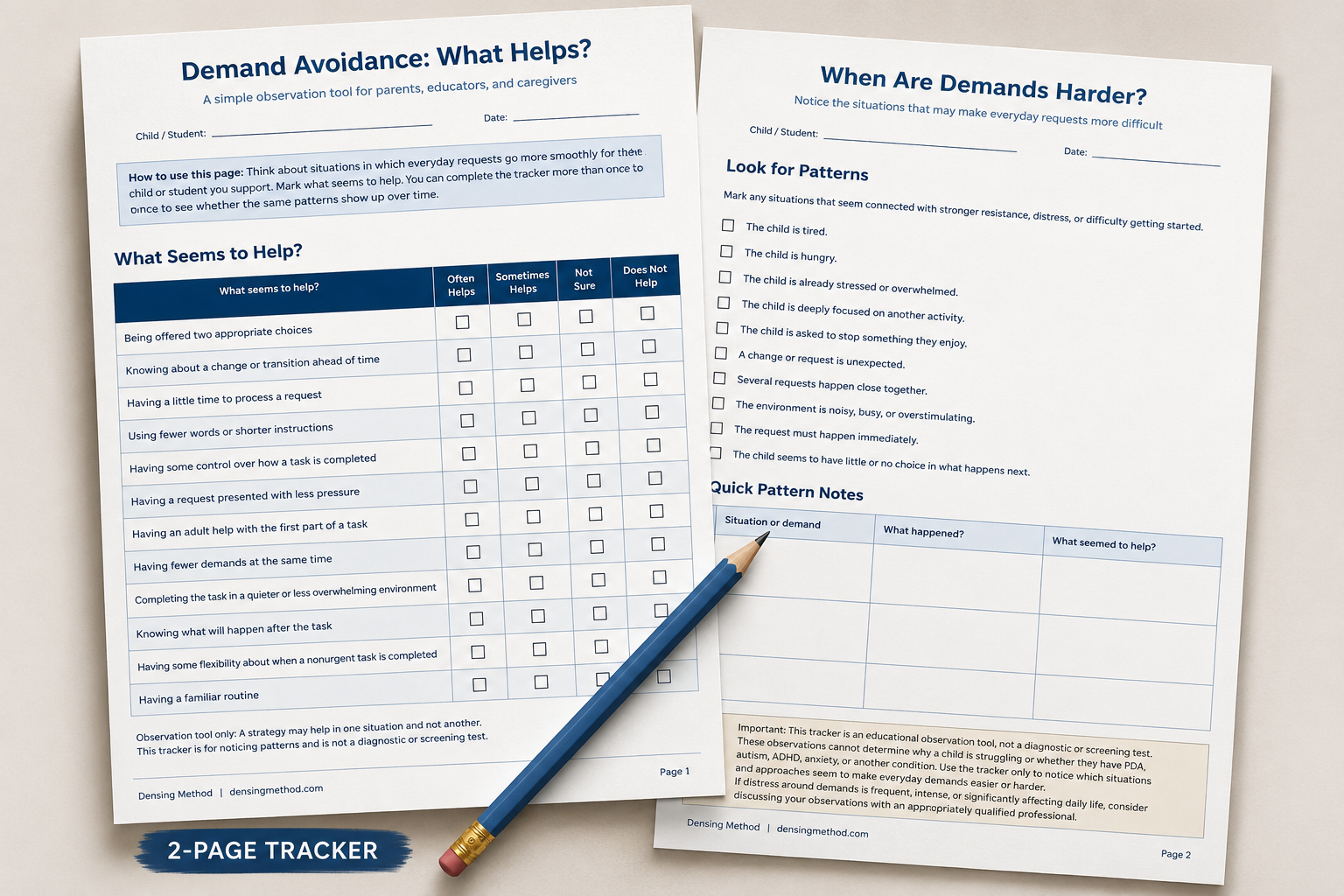
Notice What Helps
Pay attention to situations in which your child manages demands more easily.
Do choices help? Does advance notice make a difference? Are certain types of requests particularly difficult? Does your child struggle more when they are already overwhelmed or when something suddenly changes?
Noticing these patterns can help you better understand what makes everyday demands easier or harder for your child.
Use the free tracker below to record what seems to help in different situations and look for patterns over time.
Keep Necessary Expectations
Supporting autonomy does not mean that children never have to do things they would rather avoid.
Health, safety, school, and everyday family responsibilities still matter. The aim is to keep necessary expectations while giving the child appropriate choices and flexibility where possible.
What helps one child may not help another. If distress around everyday demands is frequent, intense, or significantly affecting daily life, consider discussing your observations with an appropriately qualified professional.
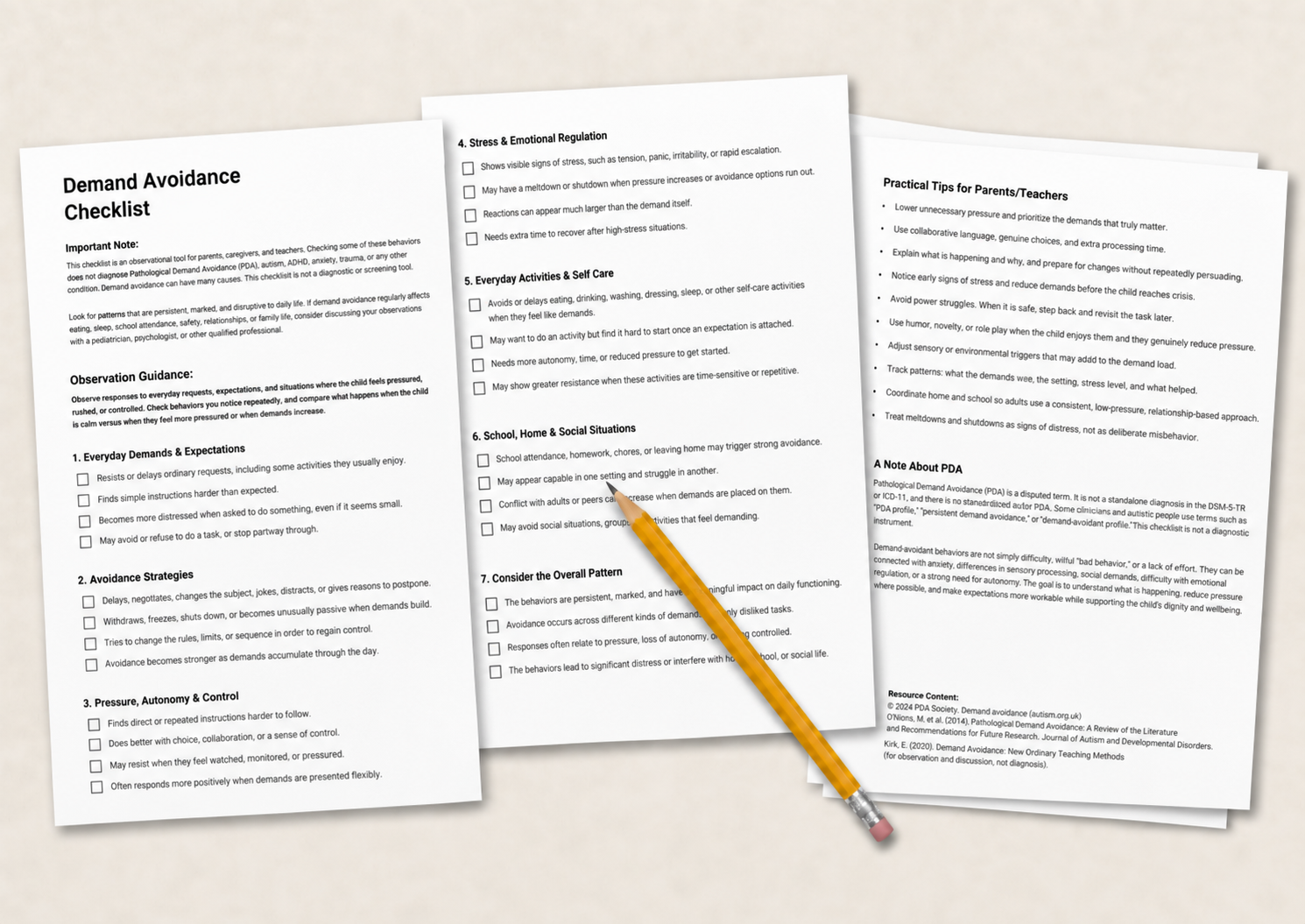
Download the Demand Avoidance Checklist
If you’re noticing some of these patterns, this checklist can help you organize what you’re seeing and identify areas where a child or student may need additional support.
It can be useful for:
• noticing common demand avoidance patterns
• organizing observations across everyday situations
• preparing for conversations with parents, teachers, or other professionals
This checklist is an educational observation tool. It is not a diagnostic or screening test and cannot determine whether a child has PDA, autism, ADHD, anxiety, or another condition.
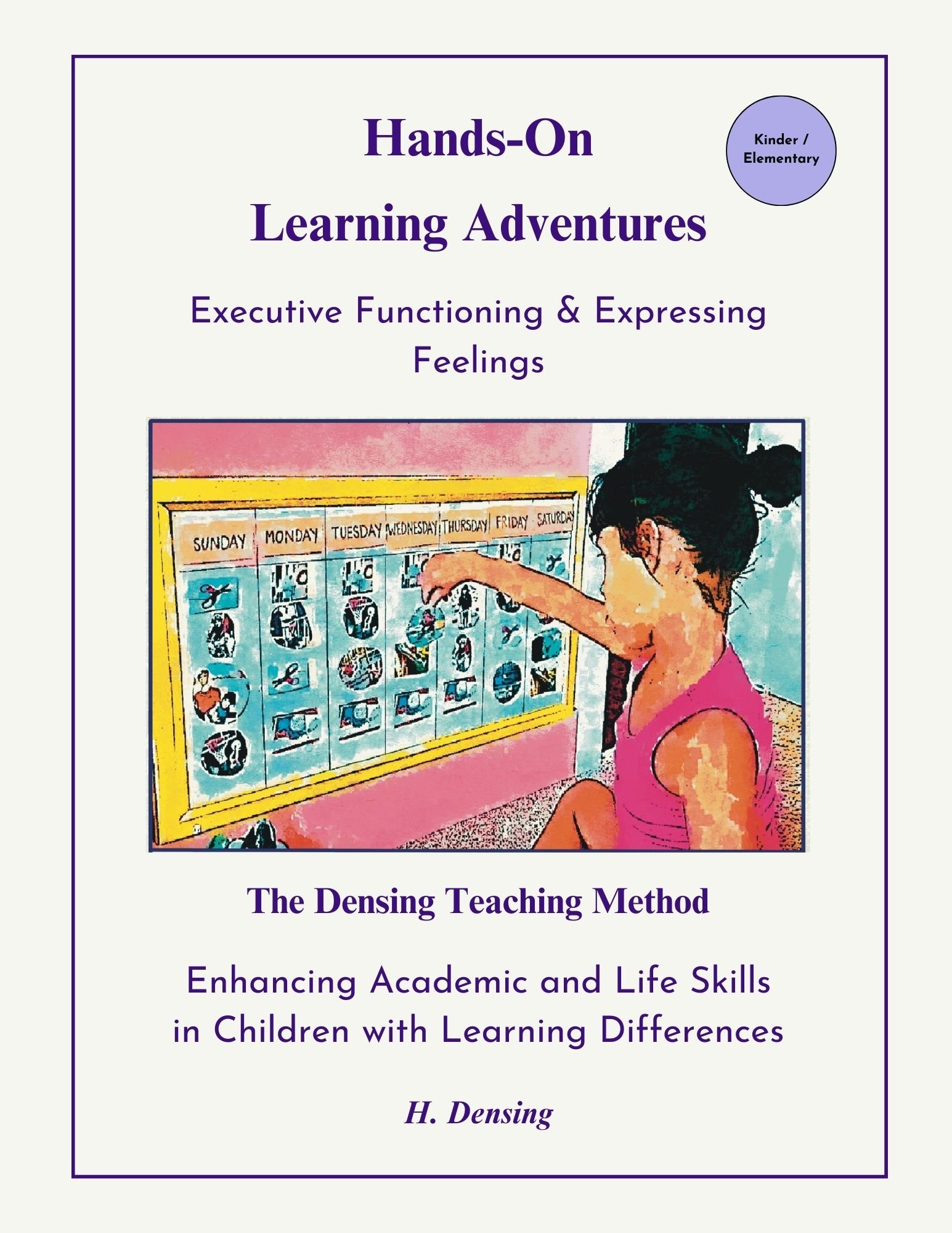
Looking for a hands-on way to support your child with focus, organization, and expressing feelings?
If your child needs more than just understanding, this step-by-step method helps build executive functioning skills through structured, visual, and practical learning.

Looking for a gentle way to support morning routines?
You can also find a free printable morning routine checklist for your child, along with children’s picture books that focus on tricky moments like getting ready, staying focused, handling big feelings, and learning how to make the best of things when plans do not go perfectly.
Explore More Neurodivergent Checklists
Every child’s brain is unique, and neurodivergent traits can show up in many different ways. If you want to explore other areas of learning, behavior, and development, these individual checklists can help you observe specific traits and find strategies to support your child:
Neurodivergence Overview – Learn about neurodivergent traits, understand differences in thinking, learning, and behavior, and access a general neurodivergence checklist.
ADHD Checklist for Children – Signs, traits, and practical strategies for attention, focus, and impulse control.
Dyspraxia Checklist for Children – Coordination, motor planning, and daily activity support.
Dysgraphia Checklist for Children – Handwriting, fine motor, and written expression challenges.
Dyslexia Checklist for Children – Reading, decoding, and language-related traits.
Dyscalculia Checklist for Children– Number sense, math skills, and problem-solving differences.
Autism Spectrum Disorder (ASD) Checklist – Social communication, repetitive behaviors, and sensory differences.
Sensory Processing Disorder (SPD) Checklist – Sensory sensitivities, seeking or avoiding input, and self-regulation.
Executive Functioning Checklist for Children – Planning, organization, task completion, and memory support.
Each checklist links to a dedicated page with practical tips and strategies to help children thrive. Tracking behaviors over time can provide useful insights for parents and caregivers and guide discussions with professionals.
Observing Learning and Development Differences: Guidance for Parents
Seeing your child show signs that match one or more of these categories can feel overwhelming, but it does not automatically mean they have a diagnosis. Many behaviors may be part of a temporary developmental phase, while others may reflect a neurodivergent learning style. The key is to keep observing your child, track behaviors using checklists, and consult a pediatrician, psychologist, or specialist for professional guidance. While a diagnosis may initially feel overwhelming, it can be a crucial step in providing your child with the right support.
By focusing on your child’s individual strengths and needs, and using positive reinforcement and structured support, you can help them feel confident, engage fully in learning, and develop skills that will benefit them long-term. Understanding these differences early allows you to provide targeted strategies, and support your child’s growth in both academic and life skills.
Takeaway: Every child is unique, and early observation combined with practical strategies and professional guidance can make a meaningful difference in their development.