

Free Oppositional Defiant Disorder (ODD) Checklist for Children: Signs & Behavior Patterns

When Everyday Conflicts Become a Concern
Does your child frequently argue, become angry when asked to do something, or refuse to follow rules? Perhaps ordinary requests turn into repeated conflicts, leaving everyone frustrated.
Occasional defiance is a normal part of growing up. But when anger, arguments, and challenging behavior become persistent and interfere with everyday life, parents may wonder whether something more is going on.
Could these behaviors be related to Oppositional Defiant Disorder (ODD)?
On this page, you'll learn what ODD is, which signs to look out for, how it differs from demand avoidance, and practical ways to support your child.
You'll also find guidance on when to seek professional help and links to related parent resources.
Explore Oppositional Defiant Disorder in Children
Looking for something specific? Choose a topic below to learn more.
Explore more checklists:
What Is Oppositional Defiant Disorder (ODD)?
Oppositional Defiant Disorder (ODD) is a behavioral disorder involving an ongoing pattern of angry or irritable moods, argumentative or defiant behavior, or spitefulness.
Children with ODD may frequently argue with adults, resist rules, lose their temper, or become easily annoyed.
All children show these behaviors sometimes. With ODD, however, the pattern is more frequent or persistent than expected for the child's age and development and causes significant difficulties in everyday life or relationships.
ODD is a recognized diagnosis that requires a professional evaluation. Occasional arguments, tantrums, or refusal to follow instructions do not mean a child has ODD.
Signs of Oppositional Defiant Disorder in Children
Children with ODD may show recurring patterns of behavior such as:
Frequently losing their temper
Becoming easily annoyed or irritated
Often appearing angry or resentful
Arguing repeatedly with adults or authority figures
Frequently refusing to follow rules or requests
Deliberately annoying others
Blaming others for mistakes or misbehavior
Showing spiteful or vindictive behavior
Not every child will show all these behaviors. The frequency, duration, developmental context, and effect on everyday life are important when professionals evaluate possible ODD.
What This May Look Like at Different Ages
In younger children, parents may notice frequent conflicts around getting dressed, leaving the house, cleaning up, or following family routines. Temper outbursts and arguments may be particularly difficult to manage.
In older children, difficulties may involve repeated arguments about rules, household responsibilities, school expectations, or interactions with adults.
These behaviors can have many possible explanations. Stress, developmental differences, communication difficulties, and other mental health concerns may also affect how a child responds to everyday situations.
What Causes Oppositional Defiant Disorder?
There is no single known cause of ODD.
A combination of factors may contribute, including a child's temperament, difficulties managing emotions, developmental and biological influences, and experiences within their environment.
Family stress and patterns of interaction can also affect challenging behavior. However, having a child with ODD does not mean parents caused the disorder.
Understanding the child's individual difficulties and circumstances is important when identifying appropriate support.
Some children with ODD also have ADHD, anxiety, learning difficulties, or other conditions that need attention during an evaluation.
ODD and Demand Avoidance: What's the Difference?
Oppositional Defiant Disorder and demand avoidance can sometimes look similar. A child may refuse requests, resist everyday expectations, or become upset when asked to complete a task.
However, the terms describe different things.
ODD is a recognized mental health diagnosis involving a persistent pattern of angry or irritable mood, argumentative or defiant behavior, or vindictiveness.
Demand avoidance describes difficulty responding to requests or expectations. It can occur for many reasons, including anxiety, feeling overwhelmed, difficulty with transitions, or a perceived loss of control.
Demand avoidance alone does not mean a child has ODD.
Some families may also encounter the term Pathological Demand Avoidance (PDA). PDA is a debated concept and is not recognized as a separate diagnosis in the DSM-5-TR or ICD-11.
Because similar behaviors can have different causes, it is important to understand what happens before and during a child's difficulties rather than assuming that refusal is deliberate defiance.
ODD and Other Conditions
ODD can occur alongside other developmental, learning, and mental health conditions. Some difficulties may also resemble oppositional behavior without indicating ODD.
ADHD: Difficulties with attention, impulsivity, and emotional regulation may occur alongside ODD.
Autism: Some autistic children may resist demands or struggle with transitions, but these behaviors do not automatically indicate ODD.
Anxiety, learning difficulties, and communication challenges can also contribute to frustration, avoidance, or conflicts around everyday expectations.
A professional evaluation can help identify possible underlying causes and determine what support a child may need.
How to Support a Child with Challenging Behavior
Supporting a child who frequently argues, becomes frustrated, or resists everyday expectations can be difficult. These strategies may help reduce conflicts and encourage cooperation.
Stay Calm During Conflicts
Respond calmly when your child becomes upset.
Avoid escalating arguments or power struggles.
Set Clear Expectations
Use simple, age-appropriate rules.
Keep routines and expectations consistent.
Encourage Positive Behavior
Recognize cooperation and small improvements.
Offer specific praise for positive behavior.
Offer Appropriate Choices
Let your child make small decisions when possible.
Allow flexibility with less important tasks.
Build Positive Connections
Spend time together doing activities your child enjoys.
Practice difficult situations in short, manageable activities when your child is calm.
Immediately praise your child for staying calm, cooperating, or making an effort.
Give positive behavior more attention than minor, harmless misbehavior.
For persistent behavioral difficulties, evidence-based approaches such as parent management training can help families develop more effective strategies.
Hands-On Activities for Younger Children
Younger children can practice recognizing emotions, following routines, and managing frustration through playful, hands-on activities.
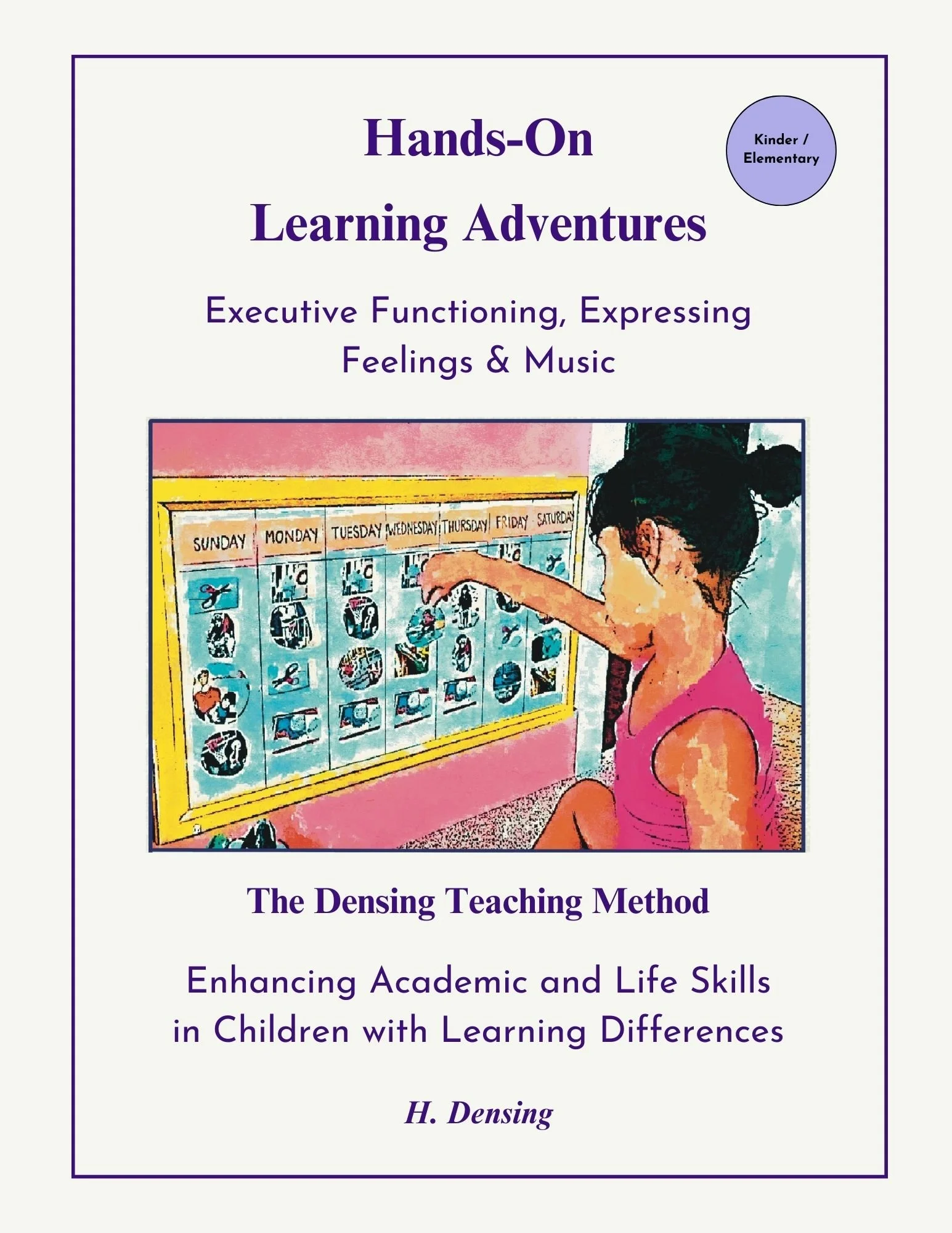
The Densing Teaching Method: Executive Functioning and Expressing Feelings book offers activities and personalized learning materials that parents and children can create together to practice these everyday skills.
These activities can complement professional support but are not a treatment for ODD.
Looking for a gentle way to support morning routines?
You can also find a free printable morning routine checklist for your child, along with children’s picture books that focus on tricky moments like getting ready, staying focused, handling big feelings, and learning how to make the best of things when plans do not go perfectly.

When to Seek Professional Guidance
Occasional defiance and frustration are normal parts of childhood. However, if your child's anger, arguments, or refusal to follow rules are persistent and significantly affect family life, relationships, or learning, consider seeking professional guidance.
Start with your child's pediatrician or a qualified child mental health professional. An evaluation can help identify possible causes and determine which types of support may be appropriate.
ODD cannot be diagnosed using an online checklist. A professional evaluation considers the child's developmental history, behavior patterns, and everyday functioning.
Free ODD Checklist and Helpful Resources
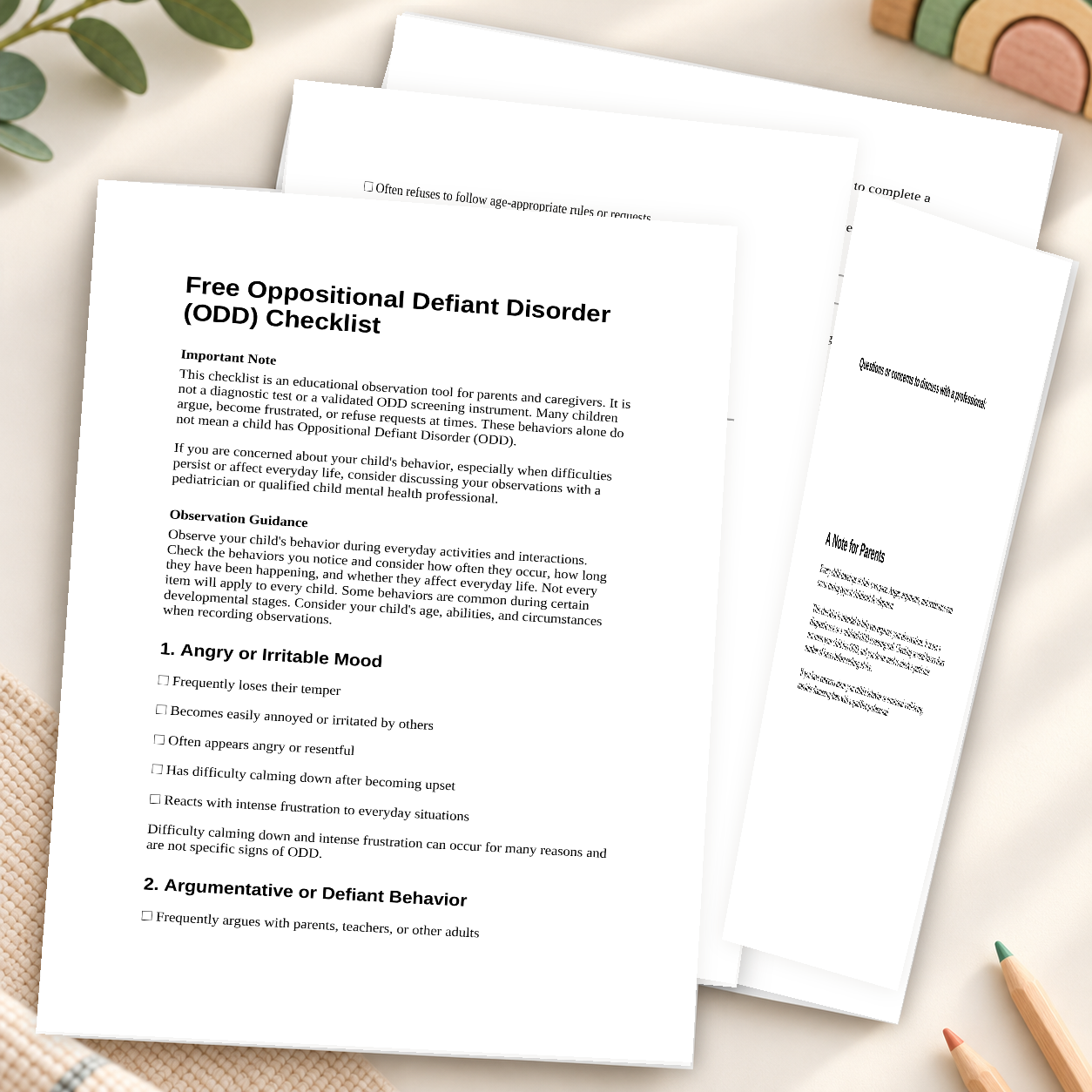
This free ODD checklist helps parents, teachers, and caregivers organize observations about frequent anger, argumentative behavior, difficulty following rules, and patterns that affect everyday life.
Use it to record concerns, notice recurring situations, and prepare for conversations with qualified professionals.
Download the Free ODD Checklist →
Important: This checklist is an educational observation tool. It is not a diagnostic test or validated ODD screening instrument.
Related Resources
Children who resist everyday requests or struggle with routines may benefit from additional support.
Explore More Free Checklists
Neurodivergence Overview – Learn about neurodivergent traits, understand differences in thinking, learning, and behavior, and access a general neurodivergence checklist.
Strength Checklist for Children – Discover your child's interests, abilities, and personal strengths to support confidence and everyday learning.
ADHD Checklist for Children – Signs, traits, and practical strategies for attention, focus, and impulse control.
Dyspraxia Checklist for Children – Coordination, motor planning, and daily activity support.
Dysgraphia Checklist for Children – Handwriting, fine motor, and written expression challenges.
Dyslexia Checklist for Children – Reading, decoding, and language-related traits.
Dyscalculia Checklist for Children– Number sense, math skills, and problem-solving differences.
Autism Spectrum Disorder (ASD) Checklist – Social communication, repetitive behaviors, and sensory differences.
Sensory Processing Disorder (SPD) Checklist – Sensory sensitivities, seeking or avoiding input, and self-regulation.
Executive Functioning Checklist – Planning, organization, task completion, and memory support.
Demand Avoidance Checklist for Children – Observe patterns of resistance to everyday requests, difficulties with transitions, and situations that may trigger demand avoidance.
Each checklist links to a dedicated page with practical tips and strategies to help children thrive. Tracking behaviors over time can provide useful insights for parents and caregivers and guide discussions with professionals.